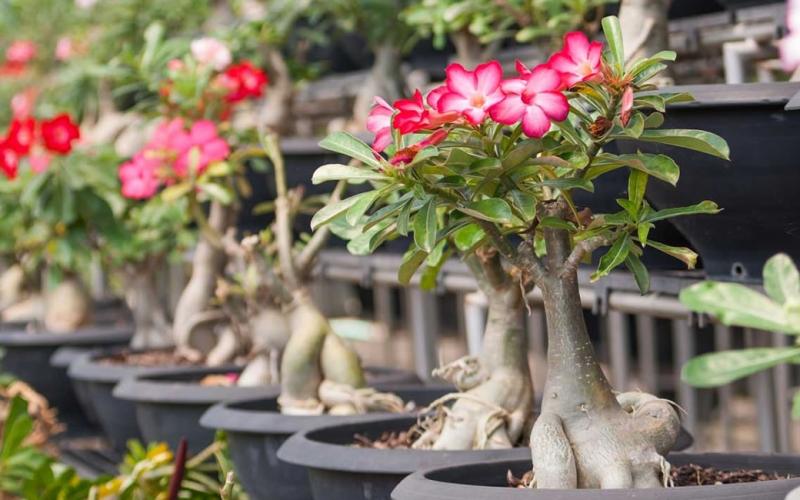
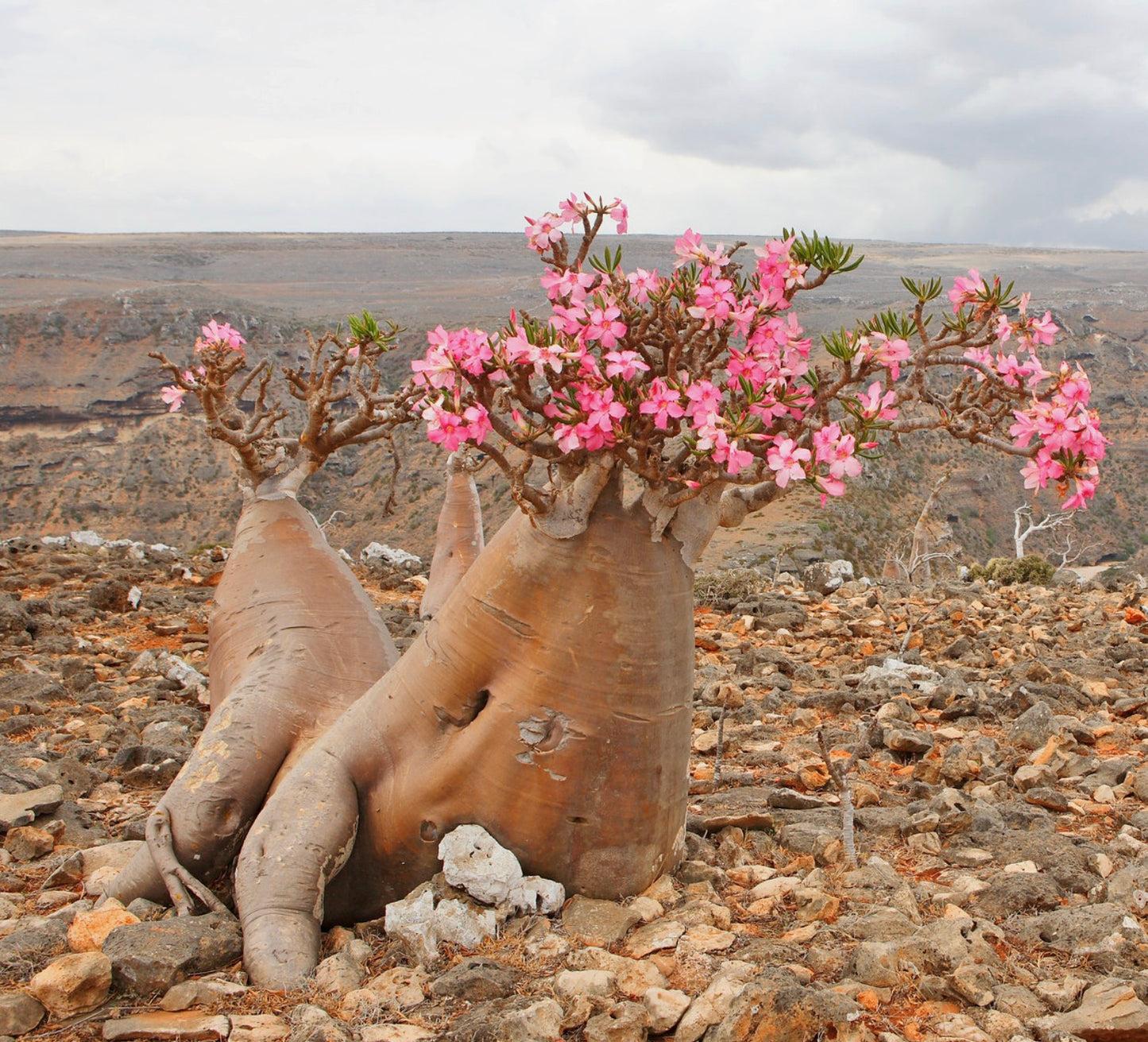
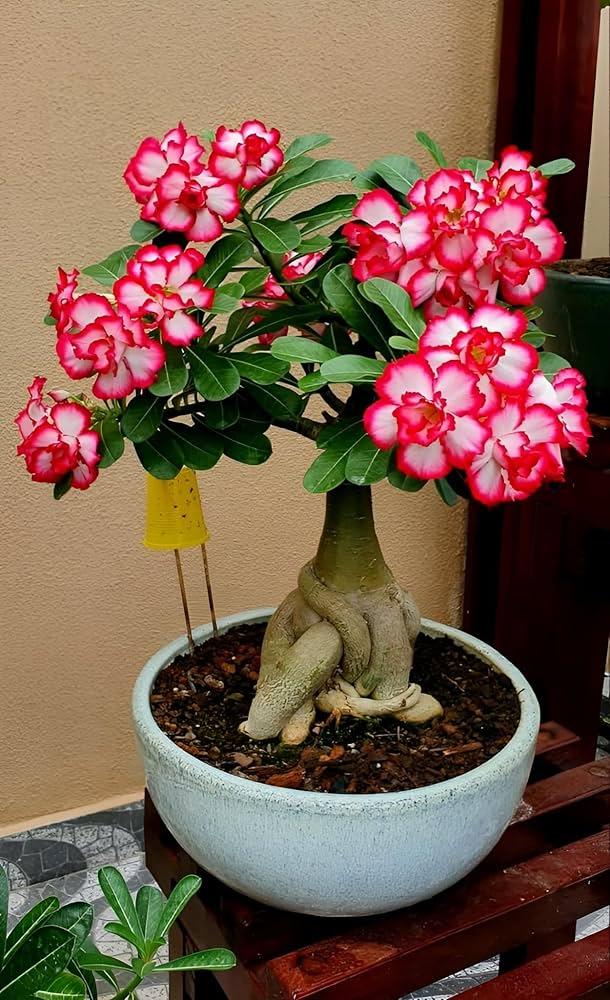
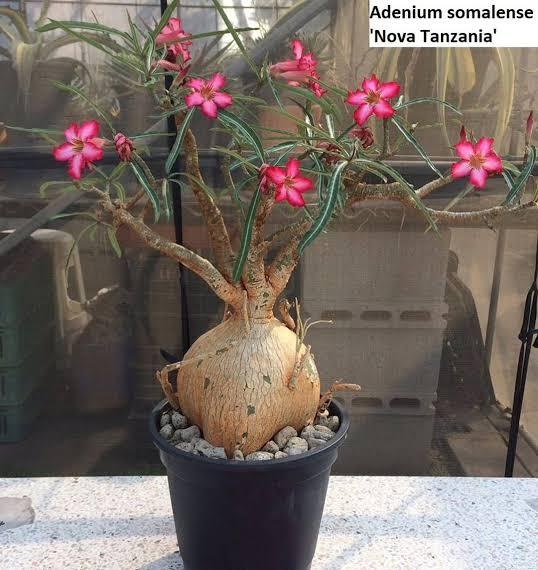
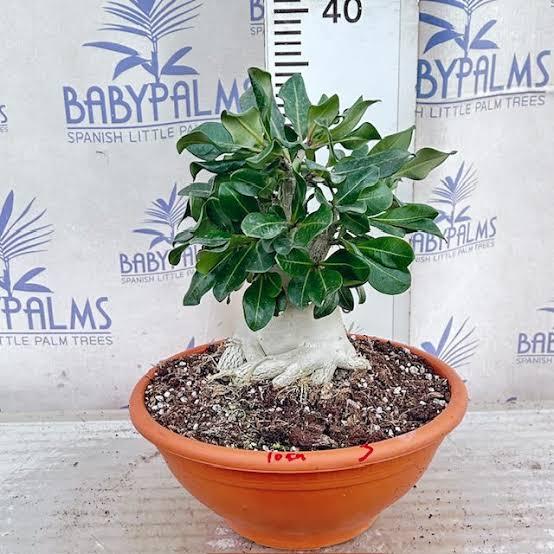
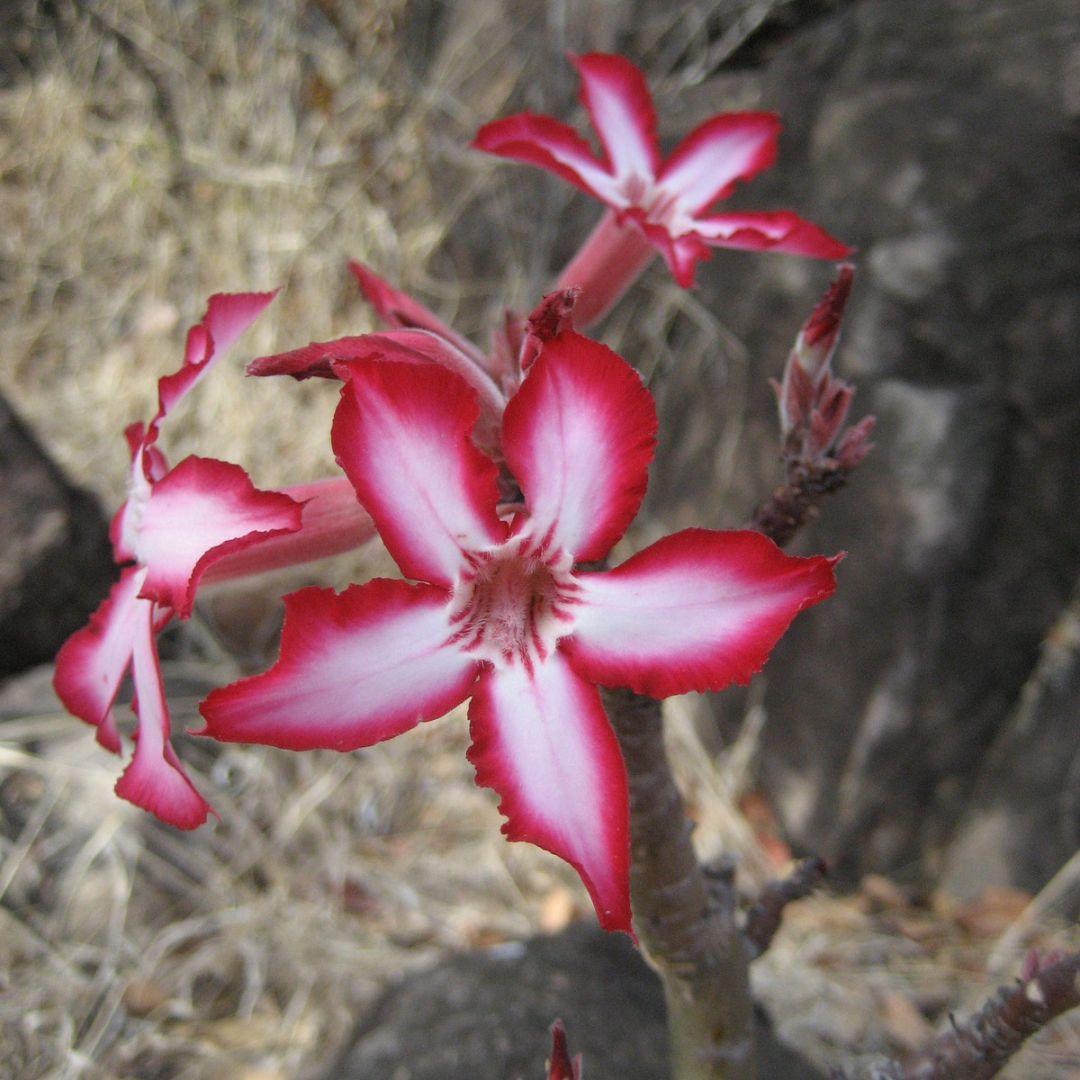
Adenium obesum, commonly known as Desert Rose, is a spectacular succulent shrub from Africa and the Arabian Peninsula celebrated for its dramatically swollen, sculptural trunk (caudex) and abundant, vivid trumpet-shaped flowers in shades of red, pink, white, and bicolor. It is prized as a bold and exotic houseplant that combines the elegance of a flowering plant with the resilience of a succulent.
Popular Adenium Species and Varieties
Guida alla Cura
Light Requirements
Adenium demands maximum light and thrives in full direct sun. Place it in the sunniest window available, ideally south-facing. At least 6 hours of direct sun per day produces the most abundant flowering. Insufficient light results in weak, leggy growth and very few flowers.
Watering Needs
Water thoroughly during the growing season (spring through summer) and allow the soil to dry almost completely between waterings. Reduce watering dramatically in autumn and keep nearly dry through winter when the plant is semi-dormant or deciduous. Never allow water to sit in the pot or around the caudex.
Soil Preferences
Use an extremely fast-draining mix. A commercial cactus mix with added perlite (50/50) or a custom mix of coarse sand, perlite, and a small amount of potting soil is ideal. The caudex must never sit in moist soil for extended periods.
Temperature and Humidity
Adenium requires warmth above 50°F (10°C) at all times. It thrives between 65°F–95°F (18°C–35°C) and does not tolerate frost or cold drafts. Low to moderate humidity is preferred; high humidity combined with cool temperatures can cause fungal issues.
Fertilization
Feed with a balanced or phosphorus-rich fertilizer (to promote flowering) every 2 weeks during spring and summer. Use a diluted liquid fertilizer or slow-release granules. Do not fertilize during the winter rest period.
Pruning and Maintenance
Prune in early spring before new growth begins to shape the plant and encourage branching, which produces more flower-bearing tips. Remove spent flowers and any dead wood. Repot every 2–3 years in spring using fresh fast-draining soil.