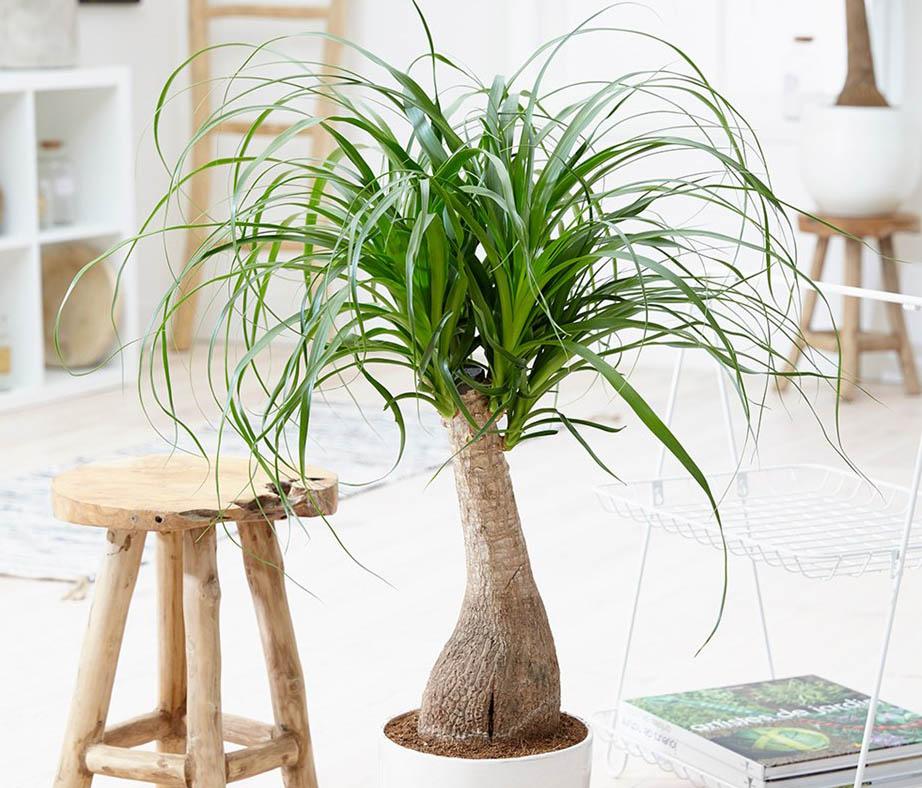
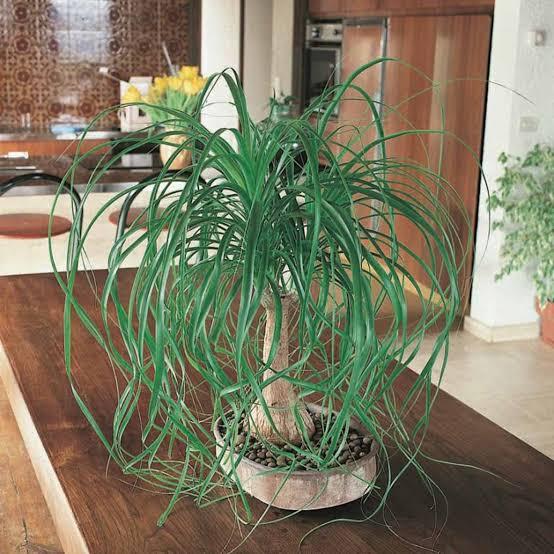
Beaucarnea recurvata, commonly known as Ponytail Palm or Elephant Foot Tree, is a striking succulent-like plant from Mexico renowned for its swollen bulbous base and long, arching strap-like leaves. Despite its common name it is not a true palm but belongs to the Asparagaceae family. It is one of the most popular and easy-care indoor plants available.
Popular Beaucarnea Varieties
Guida alla Cura
Light Requirements
Beaucarnea thrives in bright light and full sun. It tolerates lower indoor light but grows best near south or west-facing windows. Insufficient light causes slow, weak growth and failure of the caudex to swell properly.
Watering Needs
Allow the soil to dry completely between waterings. Water deeply but infrequently, approximately every 2–4 weeks in summer and every 4–6 weeks in winter. The swollen base stores water, making overwatering the primary cause of decline and death.
Soil Preferences
Use a fast-draining cactus or succulent mix. Add extra perlite or coarse grit to standard potting soil. The pot must have excellent drainage holes to prevent any water retention.
Temperature and Humidity
Tolerates a wide temperature range from 50°F to 90°F (10°C–32°C). Prefers warm conditions but is surprisingly cold-tolerant for a succulent. Average indoor humidity is perfectly adequate; no special humidity measures are needed.
Fertilization
Fertilize once or twice during the growing season (spring and summer) with a balanced diluted liquid fertilizer at quarter strength. Avoid over-fertilizing, which causes excessive weak growth.
Pruning and Maintenance
Remove brown leaf tips with clean scissors, cutting at an angle to maintain a natural appearance. Remove entire dead lower leaves at the trunk. Repot only every 3–5 years, as slightly rootbound plants tend to perform better.