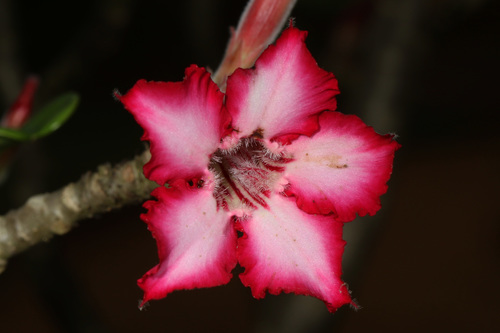
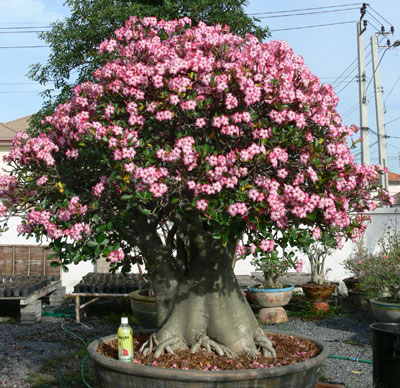
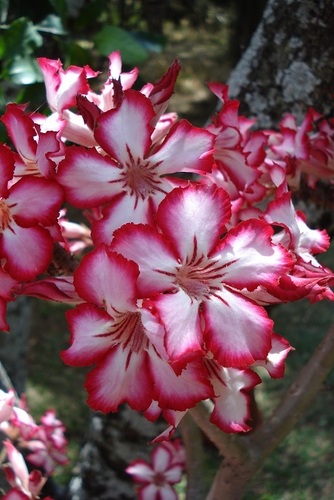
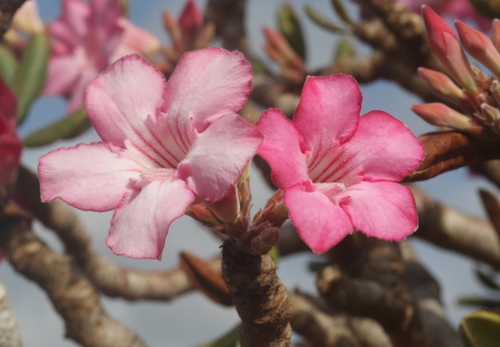
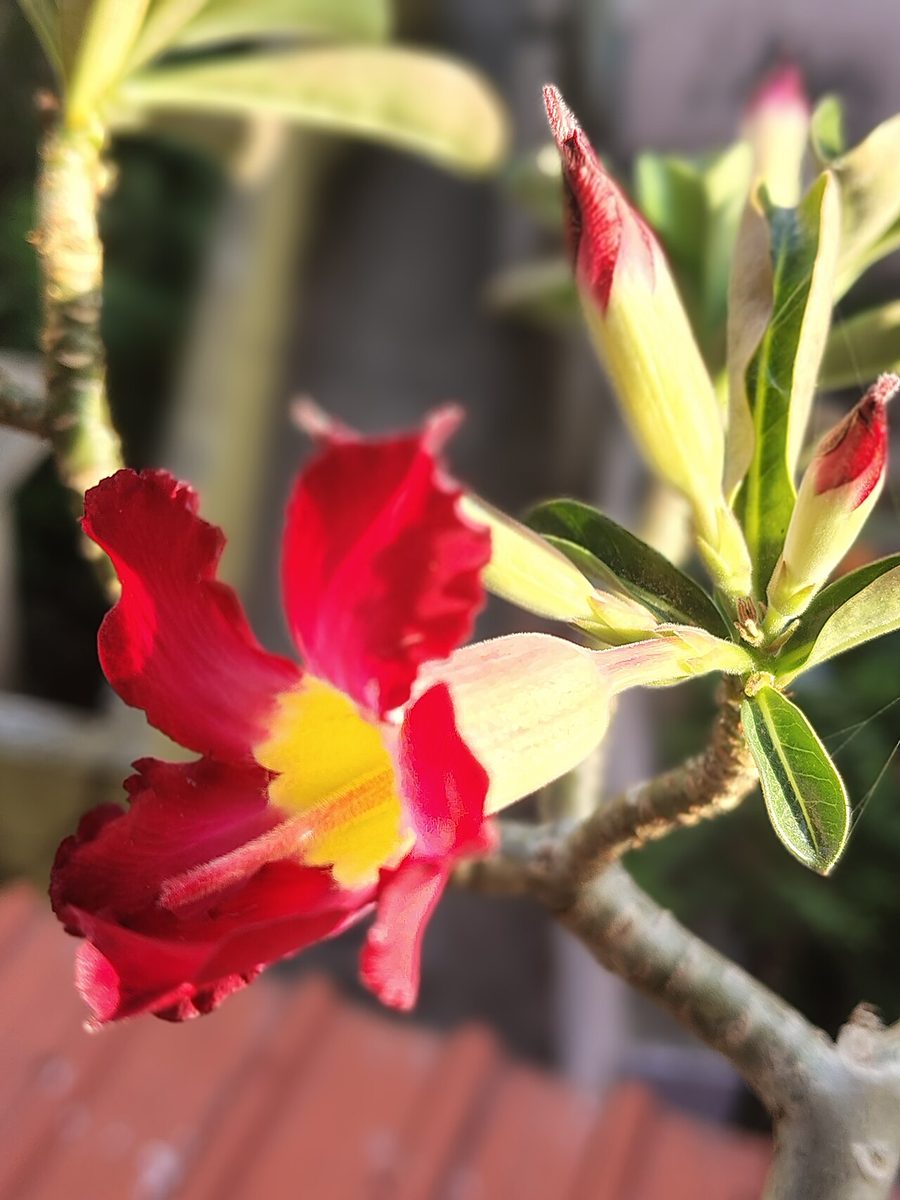
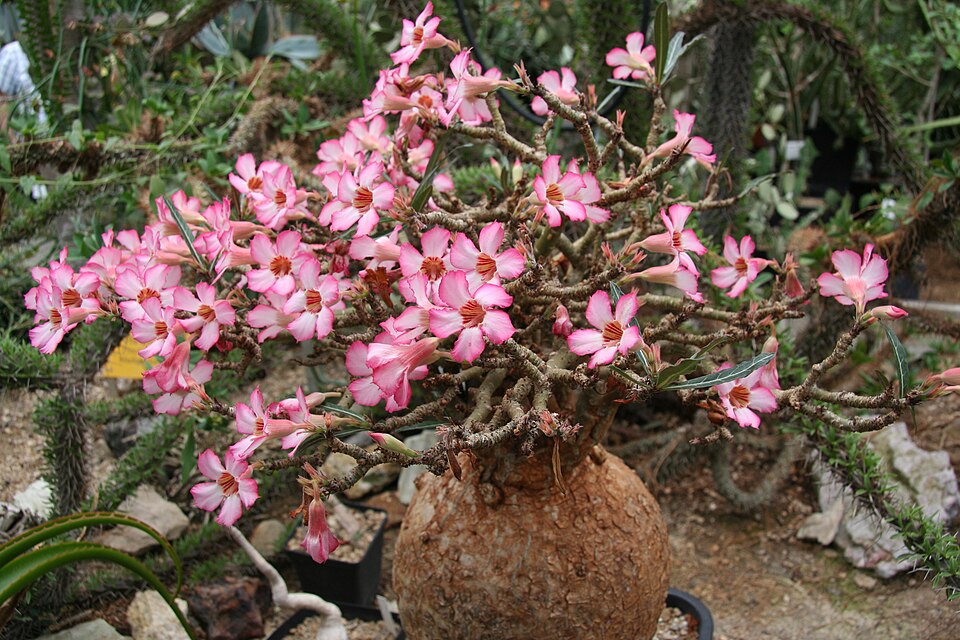
Adenium obesum, conosciuta come rosa del deserto, è uno spettacolare arbusto succulento dell'Africa e della penisola arabica, famoso per il tronco scultoreo e vistosamente rigonfio (caudice) e per gli abbondanti fiori a trombetta dai colori vivaci, nelle tonalità del rosso, del rosa, del bianco e bicolori. È apprezzata come pianta da appartamento esotica e di grande effetto, che unisce l'eleganza di una pianta da fiore alla resistenza di una succulenta.
Habitat naturale
Adenium obesum è originario delle regioni aride e semiaride dell'Africa subsahariana e della penisola arabica, dal Senegal a est fino alla Somalia e a sud fino al nord-est del Sudafrica. Cresce su pendii rocciosi, nella savana aperta e nelle boscaglie secche, spesso radicato nelle fessure o in terreni sottili e ben drenati, esposto a un sole intenso.
Storia e cultura
La rosa del deserto ha radici profonde nella cultura africana: molte popolazioni indigene ne usano parti nella medicina tradizionale e come fonte di veleno per le frecce. La linfa lattiginosa contiene glicosidi cardioattivi tossici per persone e animali. Nel Sud-est asiatico, in particolare in Thailandia, la coltivazione dell'adenio è diventata una vera arte, con appassionati che hanno selezionato migliaia di cultivar per colore e forma dei fiori e forma del caudice.
Utilizzi
L'adenio è una delle succulente da fiore più diffuse al mondo. In Thailandia e a Taiwan si coltiva come una forma d'arte vicina al bonsai, con innesti elaborati e modellatura del caudice. Nei paesi occidentali è apprezzato come pianta da appartamento esotica e da serra per la possibilità di fiorire tutto l'anno al caldo.
Conservazione
Adenium obesum non è a rischio a livello globale, ma alcune sottospecie subiscono la perdita di habitat e la raccolta in natura. Le piante coltivate sono facilmente reperibili: acquistarle sempre da vivaisti affidabili e mai prelevate in natura.
Guida alla cura
Luce
L'adenio (rosa del deserto) vuole tutta la luce possibile: almeno 6 ore di sole diretto al giorno. Una finestra a sud o, meglio ancora, l'esterno in estate sono indispensabili. Con luce insufficiente non fiorisce, filla e il caratteristico caudice (il tronco rigonfio) si indebolisce. È una vera amante del sole che prospera nelle condizioni più luminose che si possano offrire.
Acqua
Seguire rigorosamente il metodo “bagna e asciuga”: annaffiare abbondantemente quando il terriccio è completamente asciutto, poi aspettare che torni del tutto asciutto prima di annaffiare di nuovo. In estate può voler dire ogni 7-10 giorni; in inverno (riposo) una volta al mese, o per niente se la pianta ha perso le foglie. Il caudice accumula molta acqua: l'eccesso d'acqua lo fa marcire in fretta ed è la principale causa di morte.
Substrato
Terriccio per cactacee e succulente a drenaggio molto rapido: 50% materiale inerte grossolano (perlite grossa, pomice, lapillo) e 50% terriccio per cactacee. Non usare mai substrati compatti che trattengono l'umidità. Si consigliano vivamente i vasi in terracotta.
Temperatura e umidità
Ideale 25-35 °C; minimo 10 °C. L'adenio è sensibile al freddo e sotto i 15 °C entra in riposo (perde le foglie). Portarlo in casa prima che la temperatura scenda sotto i 10 °C. L'aria secca gli giova: l'umidità alta favorisce le malattie fungine.
Concimazione
Concimare ogni 2 settimane in primavera ed estate con un concime diluito più ricco di fosforo e potassio (per esempio un 5-10-10 o quello per pomodori) per favorire i fiori spettacolari. Non concimare in autunno e in inverno.
Potatura
Potare in primavera per dare forma alla pianta e favorirne la ramificazione: ogni punta tagliata produce 2-4 nuovi rami e più fiori. Lasciare asciugare le superfici di taglio per 24 ore prima di bagnarle. ⚠️ MOLTO TOSSICO: tutta la pianta contiene glicosidi cardioattivi (come l'oleandro), e la linfa è particolarmente velenosa. Usare i guanti quando lo si pota e tenerlo rigorosamente lontano da bambini e animali.
Propagazione
Talea
La talea di fusto è il metodo di moltiplicazione più facile e dà piante in fiore prima che da seme.
1
In primavera o in estate tagliare una punta di fusto sana lunga 10-15 cm.
2
Lasciare asciugare la talea in un posto ombreggiato per 3-5 giorni, finché non cicatrizza.
3
Immergere l'estremità tagliata nell'ormone radicante (facoltativo ma utile).
4
Piantarla in terriccio per cactacee asciutto e a drenaggio rapido e non annaffiare per una settimana.
5
Annaffiare con parsimonia e mettere in pieno sole; le radici si formano in 3-6 settimane.
Semina
Da seme si ottengono piante con un caudice più pronunciato e un carattere individuale, ma la fioritura richiede 2-3 anni.
1
Sow fresh seeds in a ben drenante seed mix; viability drops quickly, so use fresh seed.
2
Per una germinazione ottimale mantenere una temperatura di 27-35 °C.
3
Mantenere il terriccio leggermente umido; la germinazione avviene in 5-14 giorni.
4
Dare subito pieno sole alle piantine per evitare che fillino.
5
Quando le piantine si sono affermate, cominciare a ridurre le annaffiature per favorire lo sviluppo del caudice.
Innesto
L'innesto è usato dai coltivatori esperti per moltiplicare le cultivar rare e accelerare la crescita. Come portainnesto si usa di solito Adenium obesum.
1
Preparare un portainnesto sano di Adenium obesum tagliandone il fusto con un taglio netto.
2
Scegliere una marza della cultivar desiderata e tagliarla dello stesso diametro del portainnesto.
3
Unire strettamente le due superfici di taglio e fissarle con nastro da innesto.
4
Tenerlo in un ambiente caldo e umido (27-32 °C) ed evitare il sole diretto per 2-3 settimane.
5
Togliere il nastro quando il punto d'innesto si è saldato e compare nuova vegetazione.
Domande frequenti
Perché il mio adenio non fiorisce?
Per fiorire ha bisogno del massimo sole diretto possibile, di caldo (oltre i 25 °C), di un concime ricco di fosforo e potassio durante la stagione di crescita e di un riposo invernale fresco e asciutto. Senza sole diretto, in casa l'adenio fiorisce raramente. Spostarlo nel posto più soleggiato disponibile o, d'estate, all'aperto.
Il mio adenio ha perso tutte le foglie: è morto?
Probabilmente no: la caduta delle foglie è il normale comportamento del riposo invernale, in risposta al fresco e alle annaffiature ridotte. Tenere la pianta all'asciutto e sopra i 10 °C. In primavera, quando le temperature salgono e si riprende ad annaffiare, spunteranno foglie nuove.
Is Adenium toxic?
Sì, estremamente. Adenium obesum è molto tossico: tutte le parti della pianta contengono glicosidi cardioattivi (simili a quelli dell'oleandro). Se ingerito può causare aritmie cardiache ed essere potenzialmente mortale per persone, gatti e cani. Usare sempre i guanti per maneggiarlo o potarlo e lavarsi bene le mani dopo.