Arum
| Regno | Plantae |
| Sottoregno | Tracheobionta |
| Superdivisione | Spermatophyta |
| Divisione | Magnoliophyta |
| Classe | Liliopsida |
| Ordine | Alismatales |
| Famiglia | Araceae |
| Sottofamiglia | Aroideae |
| Genere | Arum |
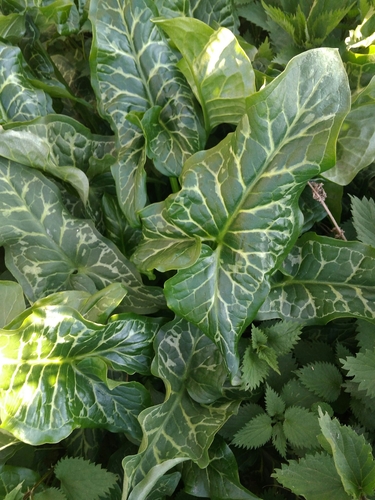
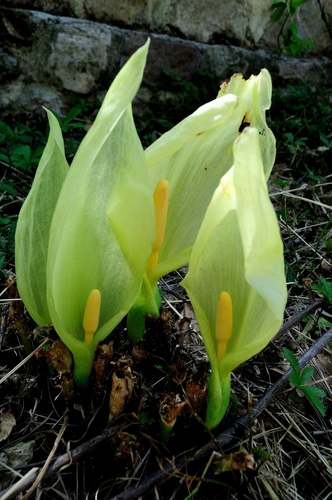
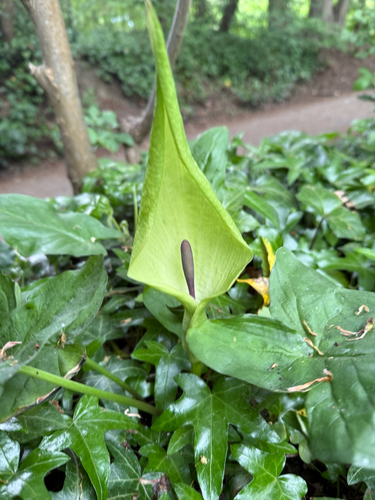
Arum italicum, noto come gigaro chiaro, è una vistosa perenne tuberosa apprezzata per le spettacolari foglie a punta di freccia con venature bianco crema. Questa pianta di sottobosco produce in primavera eleganti spate color crema, seguite in estate da bacche rosso-arancio brillante. È apprezzato per l'interesse decorativo invernale e per la tolleranza all'ombra.
Specie e varietà (2)
Guida alla cura
Luce
L'Arum preferisce luce intensa indiretta o mezz'ombra. Il classico Arum italicum tollera anche un'ombra piuttosto fitta, il che lo rende utile nelle posizioni difficili e poco luminose. Evitare il sole diretto forte. Molte specie di Arum sono adattate al sottobosco, con luce screziata.
Acqua
Durante la crescita mantenere il terriccio moderatamente umido, lasciando asciugare i primi 2-3 cm tra un'annaffiatura e l'altra. L'Arum è tuberoso e ha un riposo estivo (a inizio estate le foglie ingialliscono e seccano naturalmente): in quel momento ridurre drasticamente le annaffiature. Riprendere normalmente in autunno, quando spunta la nuova vegetazione.
Substrato
Substrato ricco, che trattenga l'umidità ma ben drenante: 60% terriccio, 20% fibra di cocco, 20% perlite. In natura l'Arum cresce in suoli di bosco ricchi di terriccio di foglie.
Temperatura e umidità
Arum italicum resiste al freddo fino a -10 °C ed è soprattutto una pianta da esterno. Come pianta da appartamento preferisce temperature da fresche a moderate (10-20 °C). L'umidità normale di casa è sufficiente.
Concimazione
Concimare una volta al mese in primavera con un concime liquido bilanciato. Ridurre in estate, quando la pianta entra in riposo.
Potatura
⚠️ TUTTE LE PARTI DELL'ARUM SONO ALTAMENTE TOSSICHE: in particolare le bacche contengono alte concentrazioni di ossalato di calcio e altre sostanze tossiche. Tenerlo rigorosamente lontano da bambini e animali. Usare i guanti quando lo si maneggia. Togliere lo spadice fiorito se le bacche sono un rischio.
Propagazione
Divisione
È il metodo principale, da fare durante il riposo estivo, quando la pianta secca completamente.
Semina
Seminare i semi freschi subito dopo la maturazione delle bacche; è un metodo lento ma dà piante robuste.