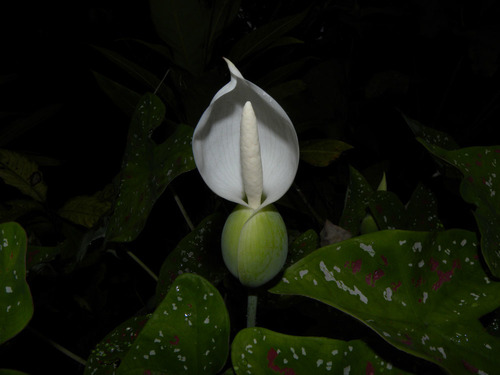
Caladium
| Regno | Plantae |
| Sottoregno | Tracheobionta |
| Superdivisione | Spermatophyta |
| Divisione | Magnoliophyta |
| Classe | Liliopsida |
| Ordine | Alismatales |
| Famiglia | Araceae |
| Sottofamiglia | Aroideae |
| Genere | Caladium |
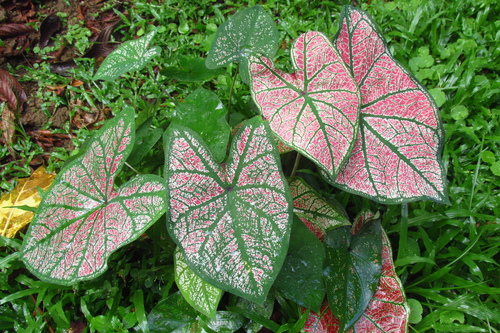
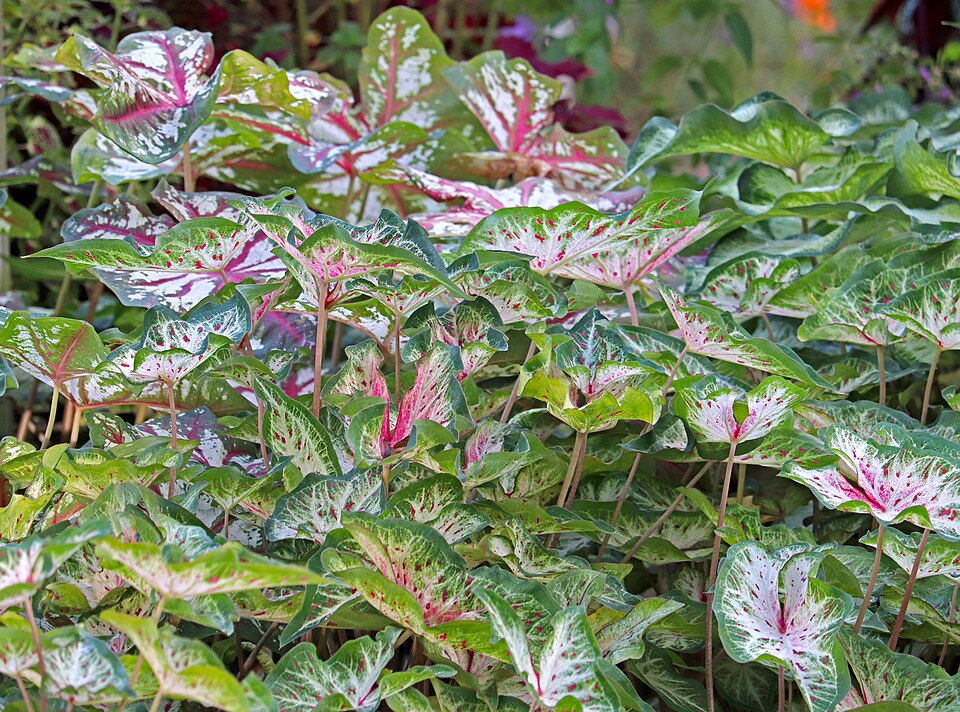
Caladium, noto come ali d'angelo o cuore di Gesù, è un affascinante genere di piante tropicali celebre per il fogliame dai colori e disegni spettacolari. Con circa 15 specie e centinaia di cultivar, i caladium sono apprezzati per le splendide foglie nei toni del rosso, rosa, bianco e verde.
Specie e varietà (2)
Guida alla cura
Luce
Il caladium preferisce la luce intensa indiretta: i vivaci disegni rosa, rossi, bianchi e verdi delle foglie si sviluppano al meglio con una buona luce filtrata, senza sole diretto. Il sole diretto sbiadisce e brucia le foglie delicate, sottili come carta. Ideale un posto a 1-2 metri da una finestra luminosa.
Acqua
Durante la stagione di crescita (primavera-estate) mantenere il terriccio costantemente umido: il caladium è una pianta tropicale che ama un'umidità uniforme. Non lasciarlo asciugare. In autunno, quando le foglie seccano naturalmente, ridurre gradualmente le annaffiature finché il tubero non viene conservato all'asciutto per l'inverno.
Substrato
Substrato ricco, che trattenga l'umidità ma ben drenante: 60% terriccio, 20% fibra di cocco, 20% perlite. pH leggermente acido (5,5-6,5).
Temperatura e umidità
Il caladium vuole il caldo: ideale 21-27 °C; per stare bene i tuberi hanno bisogno di almeno 18 °C. La sensibilità al freddo è estrema: anche una breve esposizione sotto i 10 °C provoca danni irreversibili. Un'umidità alta (60-80%) è importante: con l'aria secca le foglie sottili imbruniscono ai bordi.
Concimazione
Concimare ogni 2 settimane durante la stagione di crescita con un concime liquido bilanciato a metà dose. Non concimare durante il riposo.
Potatura
In autunno le foglie seccano naturalmente e il tubero entra in riposo. Lasciare seccare del tutto il fogliame, poi toglierlo e conservare il tubero in torba asciutta, fibra di cocco o sabbia a 18-21 °C (senza farlo stare al freddo). In primavera ripiantare i tuberi in terriccio fresco e umido: germogliano entro 4-6 settimane. Tutte le parti del caladium contengono ossalato di calcio: è tossico per animali e persone.
Propagazione
Divisione
Il metodo più sicuro è dividere i tuberi all'inizio della primavera, prima di piantarli.