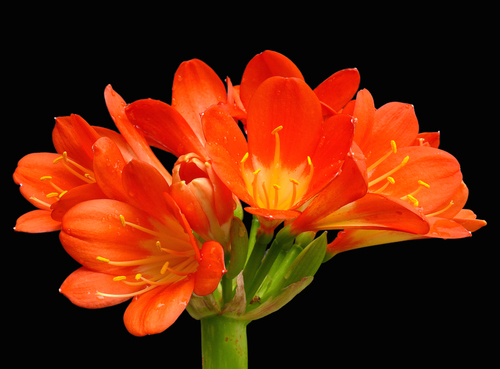
Clivia
| Regno | Plantae |
| Sottoregno | Tracheobionta |
| Superdivisione | Spermatophyta |
| Divisione | Magnoliophyta |
| Classe | Liliopsida |
| Ordine | Asparagales |
| Famiglia | Amaryllidaceae |
| Sottofamiglia | Amaryllidoideae |
| Genere | Clivia |
La clivia è uno splendido genere di piante perenni sudafricane, famose per le foglie nastriformi e vistose e per gli spettacolari grappoli di fiori a trombetta arancioni, gialli o rossi che sbocciano a fine inverno o in primavera. Clivia miniata è la specie più coltivata ed è apprezzata come pianta da appartamento longeva e poco impegnativa.
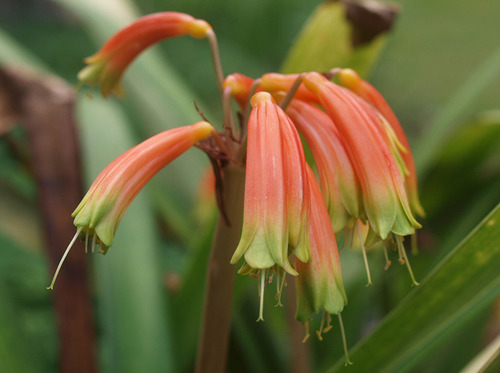
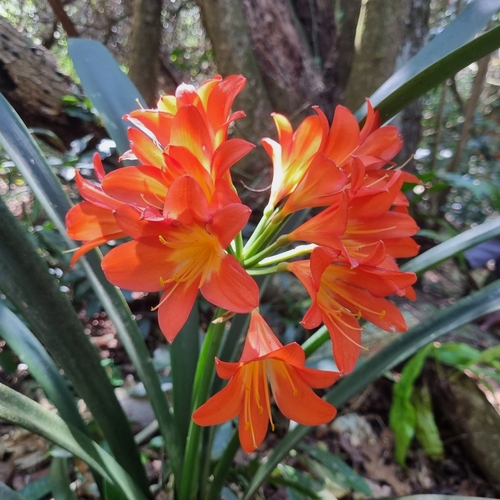
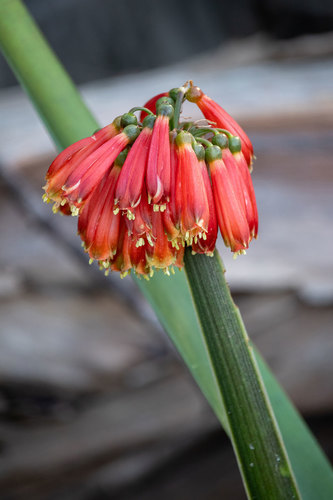
Specie e varietà (3)
Guida alla cura
Luce
La clivia prospera con luce intensa indiretta e tollera bene la mezz'ombra: è una delle poche piante da fiore che danno risultati sicuri anche con poca luce. Il sole diretto brucia le foglie nastriformi e può impedire la fioritura. L'ideale è una finestra esposta a nord o a est, o comunque un posto riparato dal sole diretto.
Acqua
Durante la stagione di crescita (primavera-estate) lasciare asciugare i primi 3-4 cm di terriccio tra un'annaffiatura e l'altra, poi annaffiare abbondantemente. FONDAMENTALE: per formare i boccioli della primavera successiva la clivia ha bisogno di un riposo invernale fresco e asciutto. Da ottobre a gennaio ridurre le annaffiature a una al mese al massimo e spostarla in un posto fresco (se possibile 7-13 °C). Senza questo riposo freddo e asciutto la clivia fiorisce raramente.
Substrato
Terriccio fertile e ben drenante: 50% terriccio, 30% perlite, 20% bark fine. Un buon drenaggio è indispensabile: le radici carnose sono soggette a marciume.
Temperatura e umidità
Ideale 18-24 °C in estate; per la fioritura è fondamentale un riposo invernale più fresco, a 7-13 °C. L'umidità normale di casa è sufficiente. Proteggerla dal gelo.
Concimazione
Concimare una volta al mese in primavera ed estate con un concime liquido bilanciato o ricco di potassio, che favorisce la fioritura. Sospendere del tutto durante il riposo invernale.
Potatura
Dopo la fioritura tagliare alla base gli steli sfioriti. Non togliere le foglie dopo la fioritura: continuano a fare fotosintesi e nutrono il rizoma per la fioritura dell'anno dopo. La clivia fiorisce meglio con le radici strette nel vaso: rinvasarla solo ogni 3-4 anni, in primavera dopo la fioritura, o quando le radici escono vistosamente dal vaso. ⚠️ Tutte le parti della clivia sono tossiche (licorina e altri alcaloidi): tenerla lontana da bambini e animali.
Propagazione
Polloni/figli
Il metodo più comune è staccare i polloni che si sviluppano alla base delle piante adulte.
Semina
Si possono anche estrarre i semi dalle bacche decorative e seminarli, ma le piante impiegano 3-5 anni a fiorire.