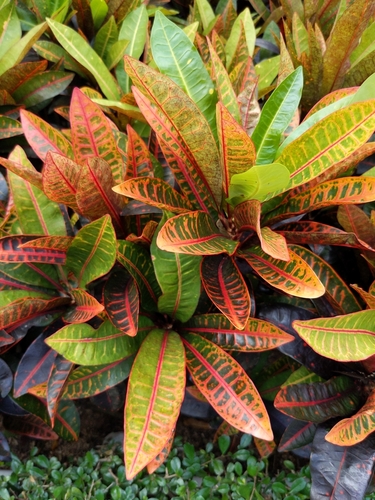
Codiaeum
| Regno | Plantae |
| Sottoregno | Tracheobionta |
| Superdivisione | Spermatophyta |
| Divisione | Magnoliophyta |
| Classe | Magnoliopsida |
| Ordine | Malpighiales |
| Famiglia | Euphorbiaceae |
| Sottofamiglia | Crotonoideae |
| Genere | Codiaeum |
Codiaeum, conosciuto comunemente come croton, è un affascinante genere di piante tropicali famose per il fogliame di grande effetto. Comprende circa 17 specie, ognuna con forma, dimensioni e colori delle foglie particolari. I croton sono apprezzati per il valore ornamentale e diffusi sia come piante da appartamento sia in giardino.
Specie e varietà (1)

Guida alla cura
Luce
Il croton vuole il posto più luminoso che si possa offrire in casa: idealmente 4-6 ore di sole diretto vicino a una finestra esposta a sud o a est. Senza una luce forte le foglie sbiadiscono in un verde spento e perdono i caratteristici disegni rossi, arancioni e gialli. D'estate, all'aperto, abituarlo al sole gradualmente per evitare scottature.
Acqua
Annaffiare abbondantemente quando i primi 2-3 cm di terriccio sono asciutti, poi lasciare sgocciolare l'acqua in eccesso. Non lasciare mai il vaso nell'acqua. In inverno ridurre la frequenza, ma senza mai lasciar seccare completamente la zolla. Il croton è sensibile sia alla siccità sia ai ristagni: un'umidità irregolare fa cadere le foglie.
Substrato
Usare un substrato ricco e ben drenante: 50% terriccio di qualità, 25% perlite, 25% bark grossolano. Un buon drenaggio è indispensabile. Ideale un pH da leggermente acido a neutro (5,5-6,5).
Temperatura e umidità
Tenerlo sempre sopra i 15 °C: il croton è molto sensibile al freddo e perde le foglie con le correnti fredde, le finestre aperte o l'aria condizionata. Temperatura ideale: 18-29 °C. Un'umidità sopra il 50% evita che le punte delle foglie secchino: nelle stanze riscaldate usare un sottovaso con ciottoli e acqua o un umidificatore.
Concimazione
In primavera ed estate concimare ogni 2 settimane con un concime liquido bilanciato (per esempio 10-10-10) a dose piena. In autunno passare gradualmente a una volta al mese e sospendere del tutto in inverno. Il troppo concime provoca accumulo di sali e bruciature alle radici.
Potatura
Potare in primavera per contenerne le dimensioni e renderlo più folto. Tagliare appena sopra un nodo con attrezzi puliti e usando i guanti: il lattice bianco irrita pelle e occhi. Ogni poche settimane pulire le grandi foglie con un panno umido per mantenerle lucide e aiutarle a catturare la luce. Nota: tutte le parti del croton sono tossiche se ingerite.
Propagazione
Divisione
Il metodo più comune per moltiplicare il croton è la divisione, che consiste nel separare fusti o radici al momento del rinvaso. Assicurarsi prima che la pianta madre sia sana.
Talea
Alcune specie di croton si possono moltiplicare per talea di fusto: le talee si fanno radicare e si invasano singolarmente.