Coffea
| Regno | Plantae |
| Sottoregno | Tracheobionta |
| Superdivisione | Spermatophyta |
| Divisione | Magnoliophyta |
| Classe | Magnoliopsida |
| Ordine | Gentianales |
| Famiglia | Rubiaceae |
| Sottofamiglia | Rubioideae |
| Genere | Coffea |
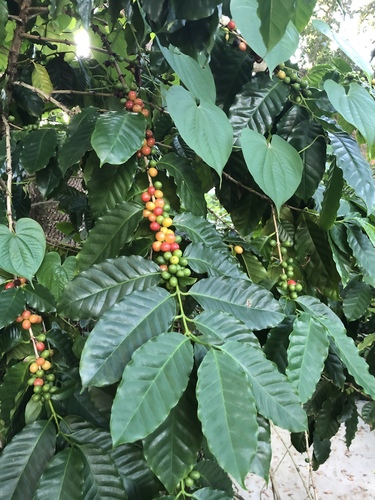
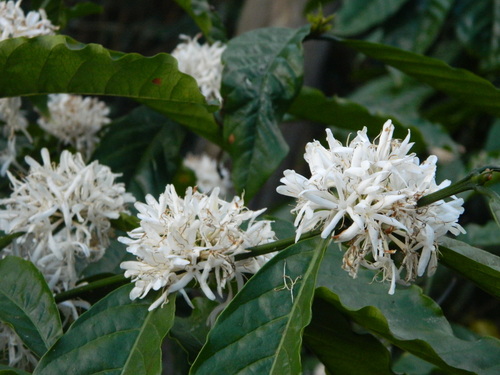
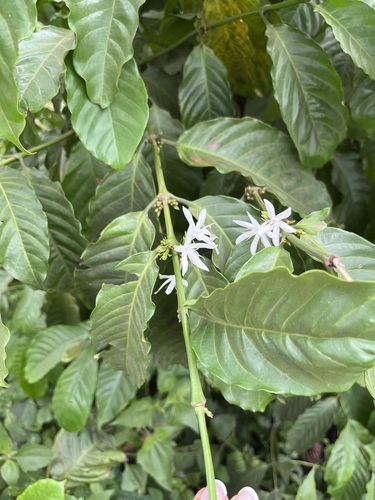
Coffea arabica, la pianta del caffè arabica, è una specie della famiglia Rubiaceae originaria delle foreste d'altura dell'Etiopia e dell'Arabia sud-occidentale. Da essa proviene circa il 60% del caffè mondiale, ed è molto coltivata anche come pianta da appartamento decorativa per il fogliame lucido e attraente, i fiori bianchi profumati di gelsomino e le decorative drupe rosse (le “ciliegie” del caffè).
Specie e varietà (2)
Guida alla cura
Luce
La pianta del caffè (Coffea arabica) prospera con luce intensa indiretta: l'ideale è vicino a una finestra esposta a est o a ovest. Tollera 1-2 ore di sole diretto al mattino, che rende la crescita più compatta. Evitare il sole forte del pomeriggio. Con luce insufficiente in casa non fiorisce e non fruttifica.
Acqua
Durante la stagione di crescita mantenere il terriccio uniformemente umido, lasciando asciugare solo il primo o i primi 2 cm tra un'annaffiatura e l'altra. La pianta del caffè è sensibile alla siccità e appassisce in fretta, ma è altrettanto sensibile ai ristagni. Dove possibile usare acqua filtrata o piovana: preferisce condizioni leggermente acide e l'acqua del rubinetto, col tempo, può risultare troppo alcalina.
Substrato
Usare un terriccio ben drenante e leggermente acido (pH 6,0-6,5): 50% terriccio universale, 25% perlite, 25% bark fine. Un'ottima alternativa è il terriccio per acidofile mescolato a perlite.
Temperatura e umidità
Ideale 18-24 °C; evitare temperature sotto i 10 °C. Un'umidità da moderata ad alta (50-70%) le giova. È sensibile alle correnti fredde.
Concimazione
Concimare una volta al mese in primavera ed estate con un concime liquido per acidofile o un concime bilanciato a metà dose. Sospendere in inverno.
Potatura
Potare in primavera per contenerne le dimensioni: senza potature, in casa può arrivare a 2 m. Cimare le punte dei fusti per una crescita più folta. In casa fiorisce e fruttifica raramente senza luce artificiale supplementare e umidità alta, ma in condizioni molto luminose la fioritura è possibile. Le foglie lucide, verde scuro, sono decorative tutto l'anno.
Propagazione
Semina
Il metodo più comune per moltiplicare la Coffea arabica è la semina, cioè far germinare i chicchi di caffè crudi (non tostati).
Talea
Coffea arabica si può moltiplicare anche per talea di fusto.