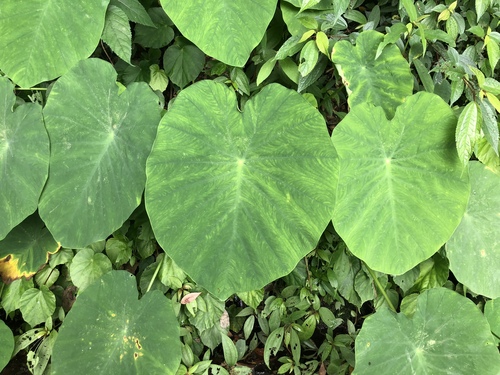
Colocasia
| Regno | Plantae |
| Sottoregno | Tracheobionta |
| Superdivisione | Spermatophyta |
| Divisione | Magnoliophyta |
| Classe | Liliopsida |
| Ordine | Alismatales |
| Famiglia | Araceae |
| Sottofamiglia | Aroideae |
| Genere | Colocasia |
Colocasia, nota come taro o orecchie di elefante, è uno spettacolare genere di aracee tropicali celebre per le enormi foglie a forma di cuore. Colocasia esculenta è la specie più coltivata, apprezzata per il fogliame imponente e scultoreo e per i tuberi commestibili. Queste piante danno subito un effetto tropicale, sia in casa sia in giardino.
Specie e varietà (1)
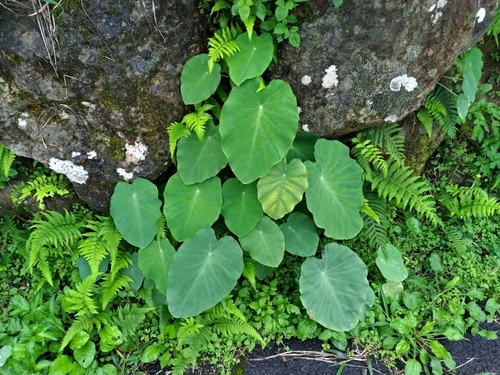
Guida alla cura
Luce
La Colocasia (taro, orecchie di elefante) preferisce luce intensa indiretta o mezz'ombra. Nel suo habitat naturale, le zone umide, riceve luce filtrata dalle chiome della foresta. Il sole diretto intenso brucia le grandi foglie. All'aperto, nei climi miti, sopporta più sole se ha acqua a sufficienza.
Acqua
La Colocasia è una delle piante da appartamento più assetate: in natura cresce nelle paludi, lungo i torrenti e persino in acqua bassa. Mantenere il terriccio costantemente da umido a bagnato. Alcune varietà possono crescere con le radici immerse nell'acqua (coltivazione acquatica). Non lasciarla mai asciugare: l'appassimento danneggia in modo irreversibile le grandi foglie. In inverno, durante il riposo, ridurre molto le annaffiature.
Substrato
Substrato ricco, fertile e che trattiene l'umidità: 60% buon terriccio, 20% fibra di cocco, 20% perlite. Per la coltivazione semiacquatica si può usare anche un substrato per piante acquatiche o palustri.
Temperatura e umidità
Ideale 18-27 °C. Molto sensibile al freddo: proteggerla dal gelo. Nei climi temperati in autunno il cormo va in riposo (le foglie seccano) e si può conservare all'asciutto e al riparo dal gelo fino alla primavera, oppure trattare la pianta come annuale. Un'umidità alta favorisce le foglie più grandi.
Concimazione
Concimare ogni 1-2 settimane durante la stagione di crescita con un concime liquido bilanciato ricco di azoto. La Colocasia cresce con vigore ed è molto esigente di nutrienti. Ridurre in autunno, quando la crescita rallenta.
Potatura
Togliere alla base le foglie vecchie o rovinate. La Colocasia cresce da un cormo (un fusto sotterraneo ingrossato) e produce facilmente polloni, che in primavera si possono separare per moltiplicarla. I cormi sono commestibili solo cotti (crudi contengono ossalato di calcio e sono tossici), e tutte le parti aeree sono irritanti se ingerite crude.
Propagazione
Divisione
È il metodo principale e usa i polloni dei cormi maturi. Meglio in primavera.