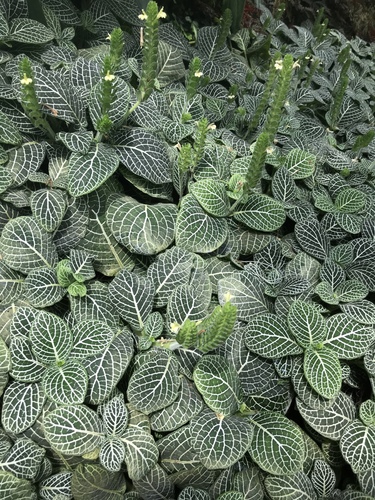
Fittonia
| Regno | Plantae |
| Sottoregno | Tracheobionta |
| Superdivisione | Spermatophyta |
| Divisione | Magnoliophyta |
| Classe | Magnoliopsida |
| Ordine | Lamiales |
| Famiglia | Acanthaceae |
| Genere | Fittonia |
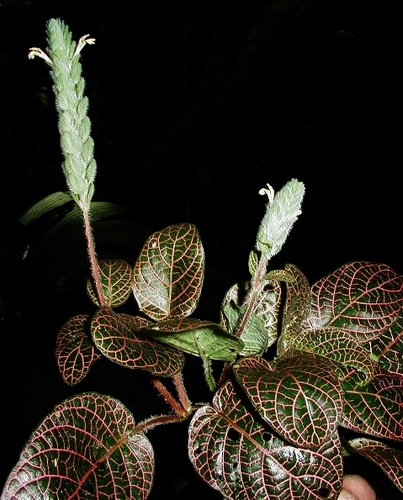
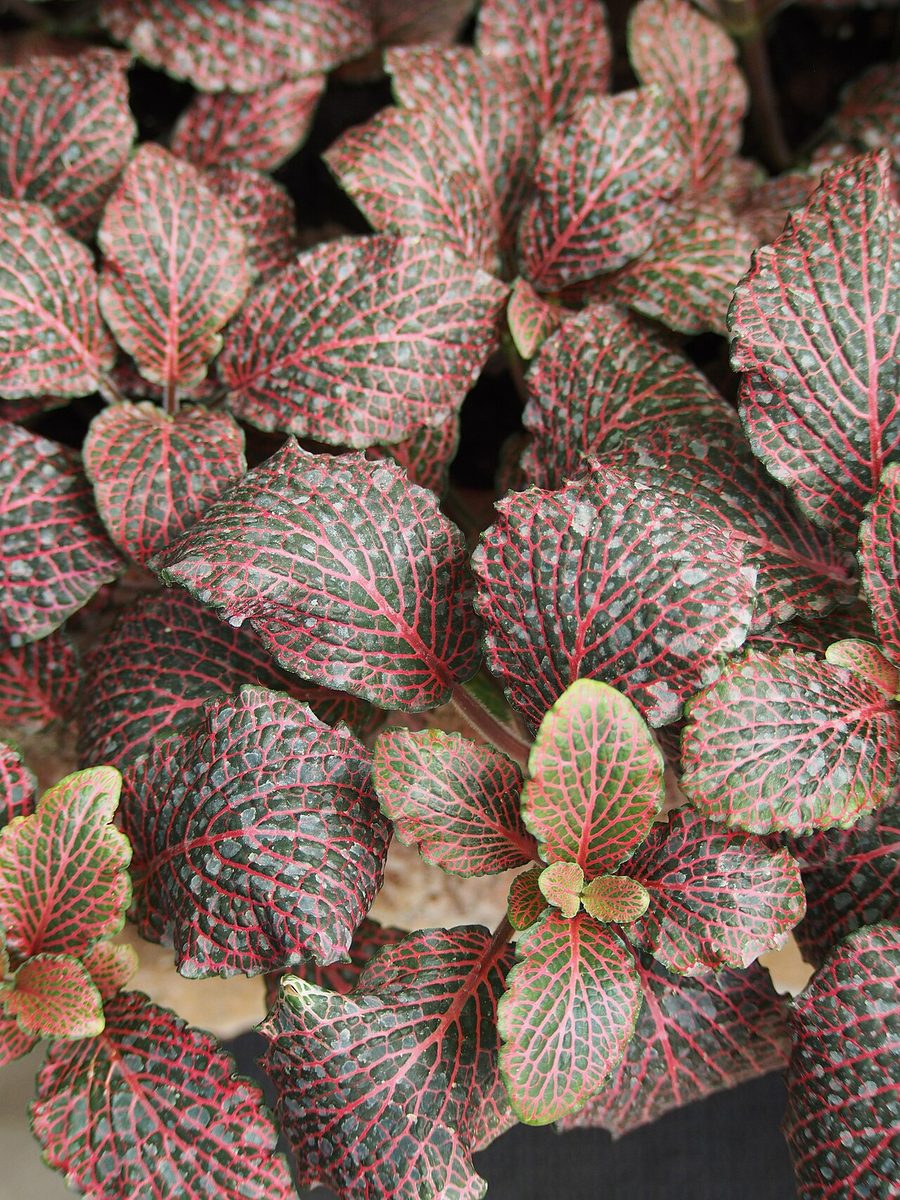
La fittonia, detta anche pianta mosaico, è un affascinante genere di piante tropicali famose per il fogliame venato di grande effetto. Comprende diverse specie, ognuna con disegni e colori delle foglie particolari. Le fittonie sono apprezzate per il valore ornamentale e diffuse sia come piante da appartamento sia nei terrari.
Specie e varietà (3)
Guida alla cura
Luce
La fittonia preferisce luce indiretta da media a intensa. Il sole diretto scolorisce e brucia le caratteristiche foglie venate. Tollera bene anche meno luce, anche se la crescita rallenta e il contrasto delle venature può attenuarsi. L'ideale è una finestra esposta a nord o a est, o un posto a 1-2 metri da una finestra luminosa. Ottima per i terrari.
Acqua
Mantenere il terriccio costantemente umido: quando si asciuga la fittonia si affloscia in modo vistoso e rapidissimo, tanto da meritarsi il soprannome di “primadonna”. Questo appassimento è però un utile segnale per annaffiare: se non è rimasta all'asciutto troppo a lungo, la pianta si riprende completamente entro un'ora dall'annaffiatura. Non lasciarla con l'acqua nel sottovaso. Usare acqua a temperatura ambiente.
Substrato
Usare un substrato che trattenga l'umidità ma con un buon drenaggio: 60% torba o fibra di cocco, 40% perlite. Le radici sottili preferiscono un terriccio soffice e aerato. pH leggermente acido (5,5-6,5).
Temperatura e umidità
Ideale 18-26 °C; minimo 15 °C. Un'umidità alta (60-80%) è indispensabile: la fittonia viene dalle foreste pluviali tropicali e prospera negli ambienti chiusi e umidi. Per le esigenze di umidità e le dimensioni compatte è una delle migliori piante da terrario.
Concimazione
Concimare ogni 2-4 settimane in primavera ed estate con un concime liquido bilanciato a un quarto della dose. La fittonia ha bisogno di poco nutrimento: il troppo concime brucia le radici.
Potatura
Cimare regolarmente le punte dei fusti per mantenerla compatta e folta. Se si allunga troppo, accorciarla drasticamente in primavera: si riprende in fretta. Rinvasarla ogni anno in primavera, perché le radici superficiali riempiono presto i vasi piccoli.
Propagazione
Talea
Il metodo più comune per moltiplicare la fittonia è la talea di fusto: si prelevano talee e le si fa radicare in acqua o nel terriccio. Assicurarsi prima che la pianta madre sia sana.
Divisione
Un altro metodo per moltiplicare la fittonia è la divisione: si separa la pianta a livello delle radici e si ripianta ogni porzione.