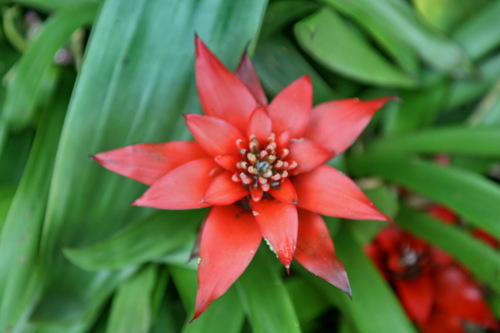
Guzmania
| Regno | Plantae |
| Sottoregno | Tracheobionta |
| Superdivisione | Spermatophyta |
| Divisione | Magnoliophyta |
| Classe | Liliopsida |
| Ordine | Poales |
| Famiglia | Bromeliaceae |
| Sottofamiglia | Tillandsioideae |
| Genere | Guzmania |
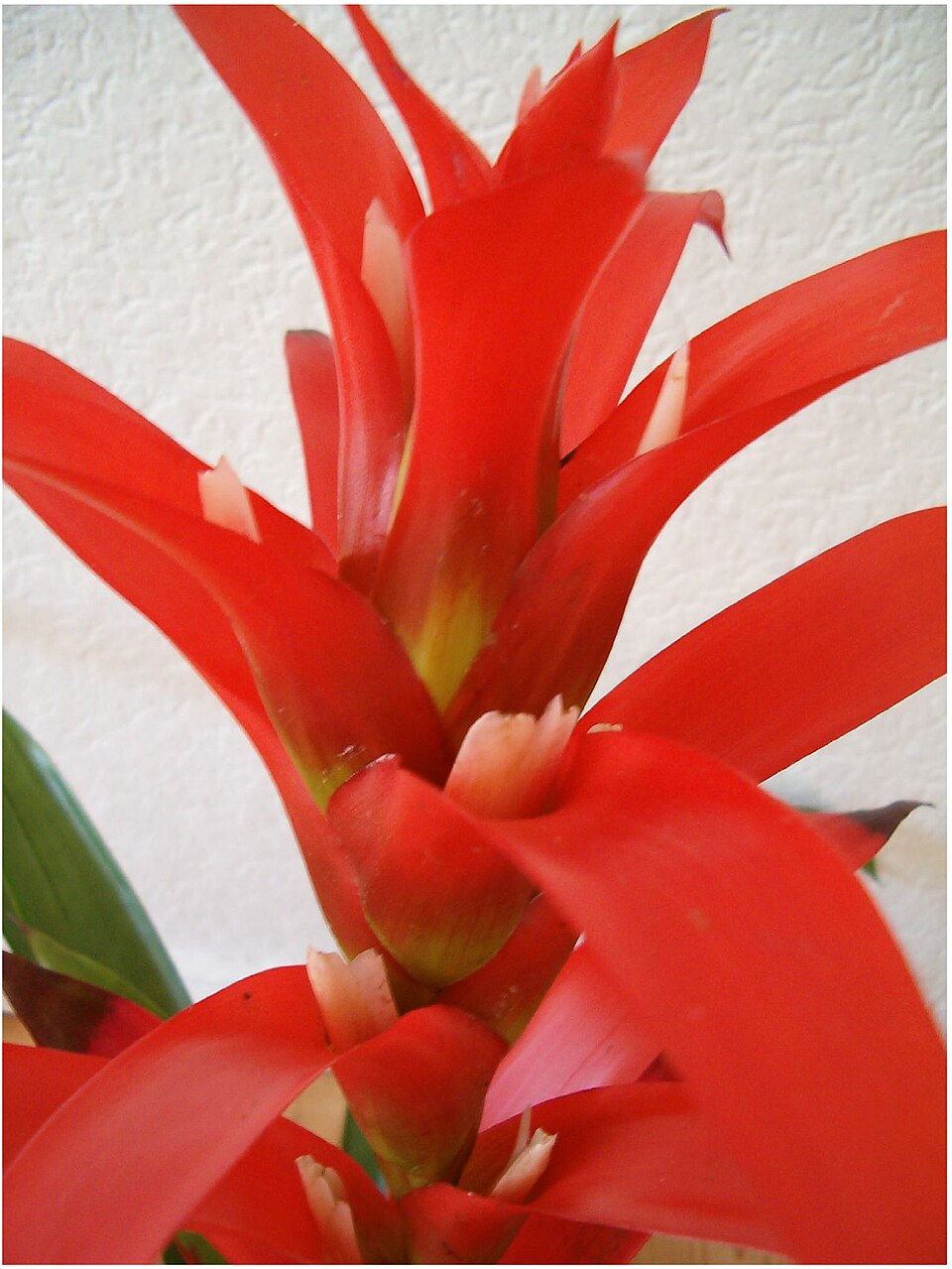
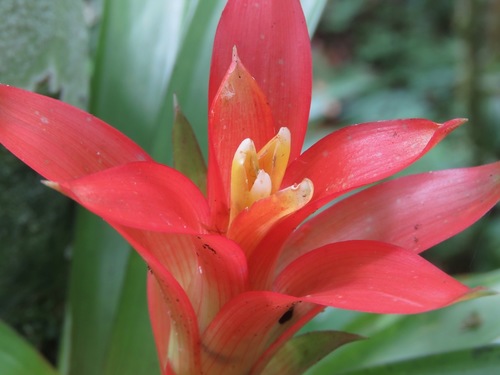
Guzmania, una delle bromeliacee più diffuse in casa, è un affascinante genere di piante tropicali famose per le brattee vistose e colorate e il fogliame vivace. Comprende circa 120 specie, ognuna con spighe fiorali e disegni delle foglie particolari. Le guzmanie sono apprezzate per il valore ornamentale e diffuse sia come piante da appartamento sia in giardino.
Specie e varietà (2)
Guida alla cura
Luce
L'ideale è la luce intensa indiretta: vicino a una finestra con luce filtrata, o a 1-2 metri da una finestra soleggiata. La guzmania tollera meno luce, ma in quel caso può non produrre la sua spettacolare spiga fiorale. Il sole diretto brucia le foglie. A differenza di molte bromeliacee, si adatta bene ai normali livelli di luce di casa.
Acqua
La guzmania è una bromeliacea “a cisterna”: riempire d'acqua la coppa centrale (l'imbuto formato dalle foglie della rosetta) e tenerla sempre rabboccata. Usare acqua piovana o distillata: i sali minerali dell'acqua del rubinetto lasciano incrostazioni e fanno imbrunire l'interno della coppa. Una volta al mese svuotare e riempire di nuovo la coppa perché l'acqua non ristagni. Il substrato va tenuto appena umido: le radici servono soprattutto ad ancorare la pianta.
Substrato
Usare un substrato molto drenante: bark per orchidee, perlite e un po' di fibra di cocco. Una buona aerazione attorno alle radici previene i marciumi: nella guzmania le radici non sono l'organo principale di assorbimento dell'acqua.
Temperatura e umidità
Ideale 18-27 °C; minimo 15 °C. Preferisce un'umidità alta (50-70%). Evitare le correnti fredde e le temperature sotto i 12 °C.
Concimazione
In primavera ed estate aggiungere una volta al mese nella coppa centrale un concime liquido bilanciato a un quarto della dose. Non concimare il substrato. Evitare i concimi ricchi di boro o rame, tossici per le bromeliacee.
Potatura
Come tutte le bromeliacee, la guzmania è monocarpica: fiorisce una volta e poi la pianta madre muore lentamente. Eliminare la spiga sfiorita quando diventa marrone. Alla base la pianta madre produrrà 2-4 polloni: aspettare che siano grandi un terzo della madre, poi separarli e invasarli singolarmente. Di solito dopo la fioritura la pianta madre impiega 1-2 anni a morire del tutto.
Propagazione
Polloni/figli
Il metodo più comune per moltiplicare la guzmania sono i polloni, piccole piante che crescono alla base della pianta madre.
Semina
La guzmania si può moltiplicare anche da seme, anche se è un metodo più difficile e lungo.