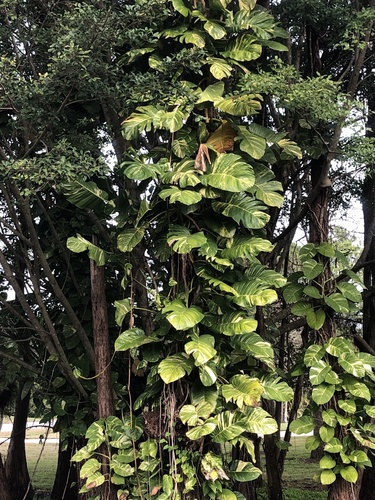
Epipremnum
| Regno | Plantae |
| Sottoregno | Tracheobionta |
| Superdivisione | Spermatophyta |
| Divisione | Magnoliophyta |
| Classe | Liliopsida |
| Ordine | Alismatales |
| Famiglia | Araceae |
| Sottofamiglia | Monsteroideae |
| Genere | Epipremnum |
Il pothos, noto anche come edera del diavolo, è una pianta da appartamento versatile e resistente, molto apprezzata per il fogliame decorativo e la facilità di coltivazione. Appartiene alla famiglia delle aracee ed è noto per i tralci ricadenti e le foglie a forma di cuore. È molto diffuso sia in casa sia all'aperto grazie alla sua adattabilità e alle poche cure che richiede.
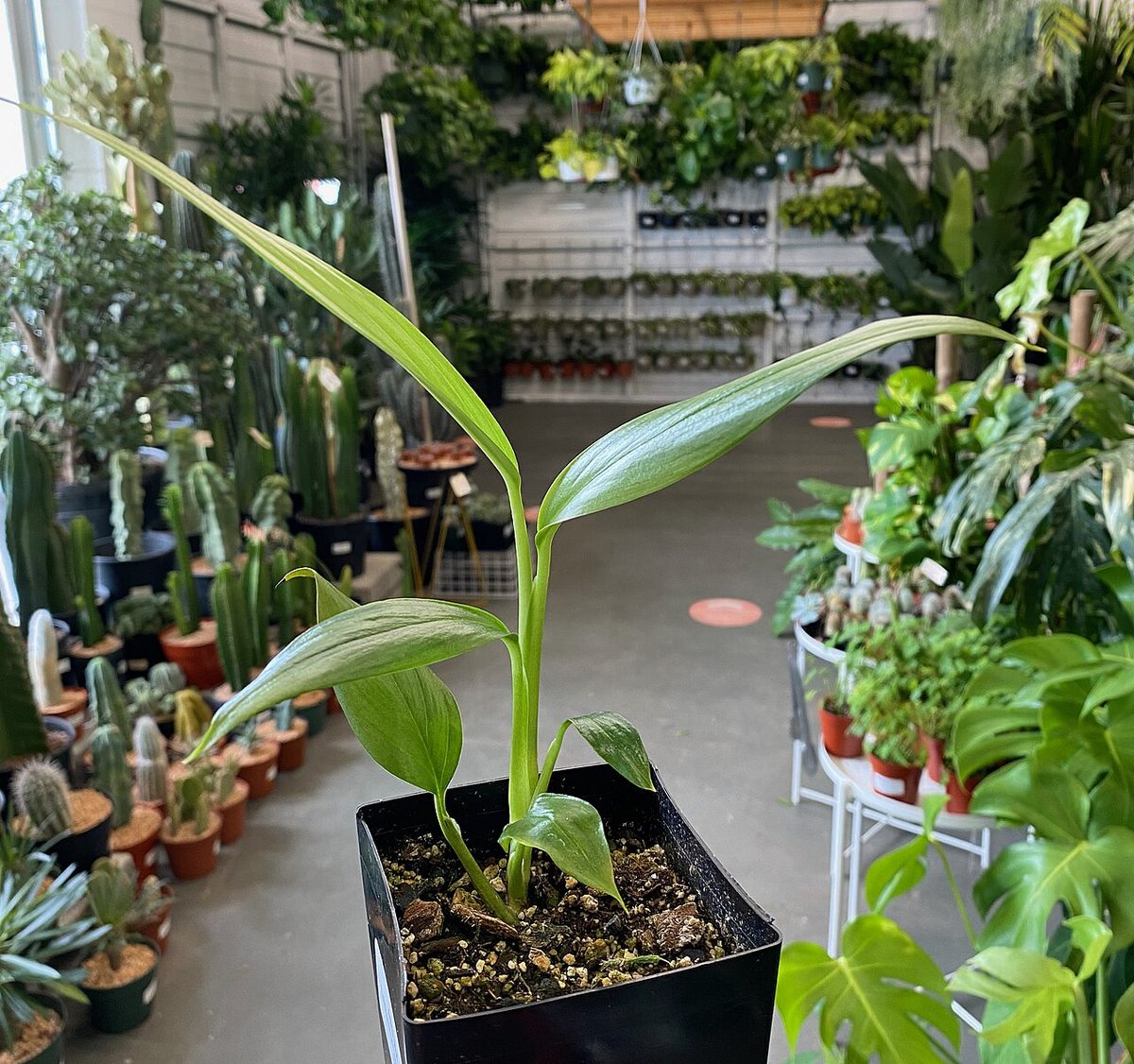
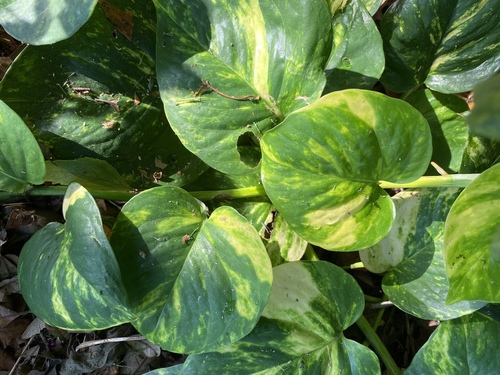
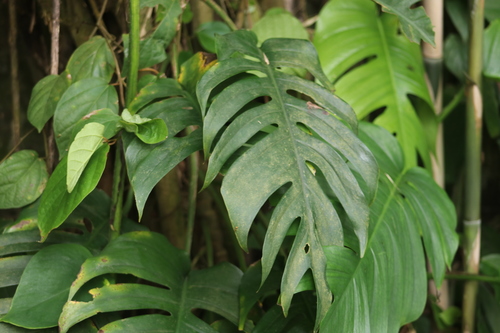
Specie e varietà (3)
Guida alla cura
Luce
È una delle piante da appartamento che si adattano meglio a ogni luce: il pothos sopravvive anche con pochissima luce (persino in stanze illuminate solo artificialmente), ma dà la crescita più bella e variegata con luce intensa indiretta. Importante: con poca luce le variegature (dorate, 'Marble Queen', 'Neon') sbiadiscono o spariscono del tutto, perché la pianta produce più clorofilla. Il sole diretto brucia le foglie.
Acqua
Lasciare asciugare il terriccio tra un'annaffiatura e l'altra: il pothos sopporta la siccità ed è molto più facile dargli troppa acqua che troppo poca. Annaffiare abbondantemente quando i primi 3-4 cm sono asciutti, poi lasciare asciugare di nuovo. Il pothos può anche crescere a tempo indeterminato in un vaso di sola acqua (radicazione in acqua). Le foglie gialle sono di solito segno di troppa acqua.
Substrato
Va bene qualsiasi terriccio ben drenante. Aggiungere perlite (3:1) migliora il drenaggio e riduce il rischio di marciume radicale. Si può coltivare anche in semi-idrocoltura o in idrocoltura.
Temperatura e umidità
Ideale 18-27 °C; tollera fino a 10 °C ma cresce meglio al caldo. L'umidità normale di casa va bene: il pothos non dipende dall'umidità. Sopporta bene l'aria secca.
Concimazione
Concimare una volta al mese in primavera ed estate con un concime liquido bilanciato a metà dose. Niente concime in autunno e inverno. Il pothos non è molto esigente.
Potatura
Potare regolarmente per mantenere la lunghezza desiderata e rendere la pianta più folta: tagliare appena sopra un nodo (il piccolo rigonfiamento marrone sul fusto) e il tralcio si ramificherà da quel punto. Le talee radicano facilissimamente in acqua in 2-3 settimane e sono ottime da regalare. Il pothos è tossico per cani e gatti (ossalato di calcio): tenerlo fuori dalla loro portata. Con poca luce, accorciare i tralci tutti verdi per favorire quelli variegati vicino alla fonte di luce.
Propagazione
Talea
Il pothos si moltiplica facilmente per talea di fusto: un metodo semplice e molto efficace.
Divisione
Le piante adulte di pothos si possono dividere al rinvaso per ottenerne di nuove.