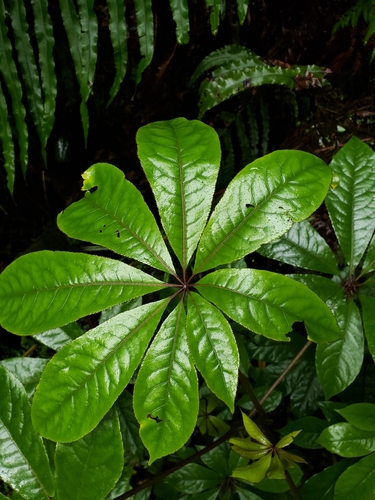
Schefflera
| Regno | Plantae |
| Sottoregno | Tracheobionta |
| Superdivisione | Spermatophyta |
| Divisione | Magnoliophyta |
| Classe | Magnoliopsida |
| Ordine | Apiales |
| Famiglia | Araliaceae |
| Genere | Schefflera |
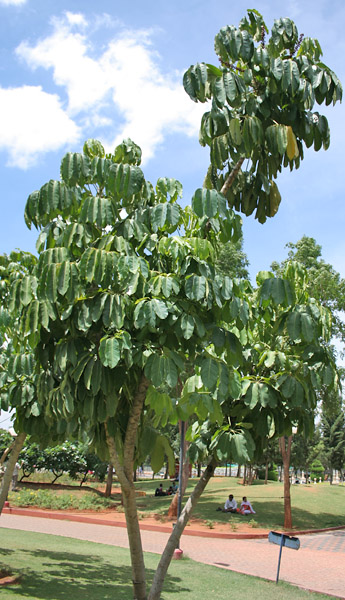
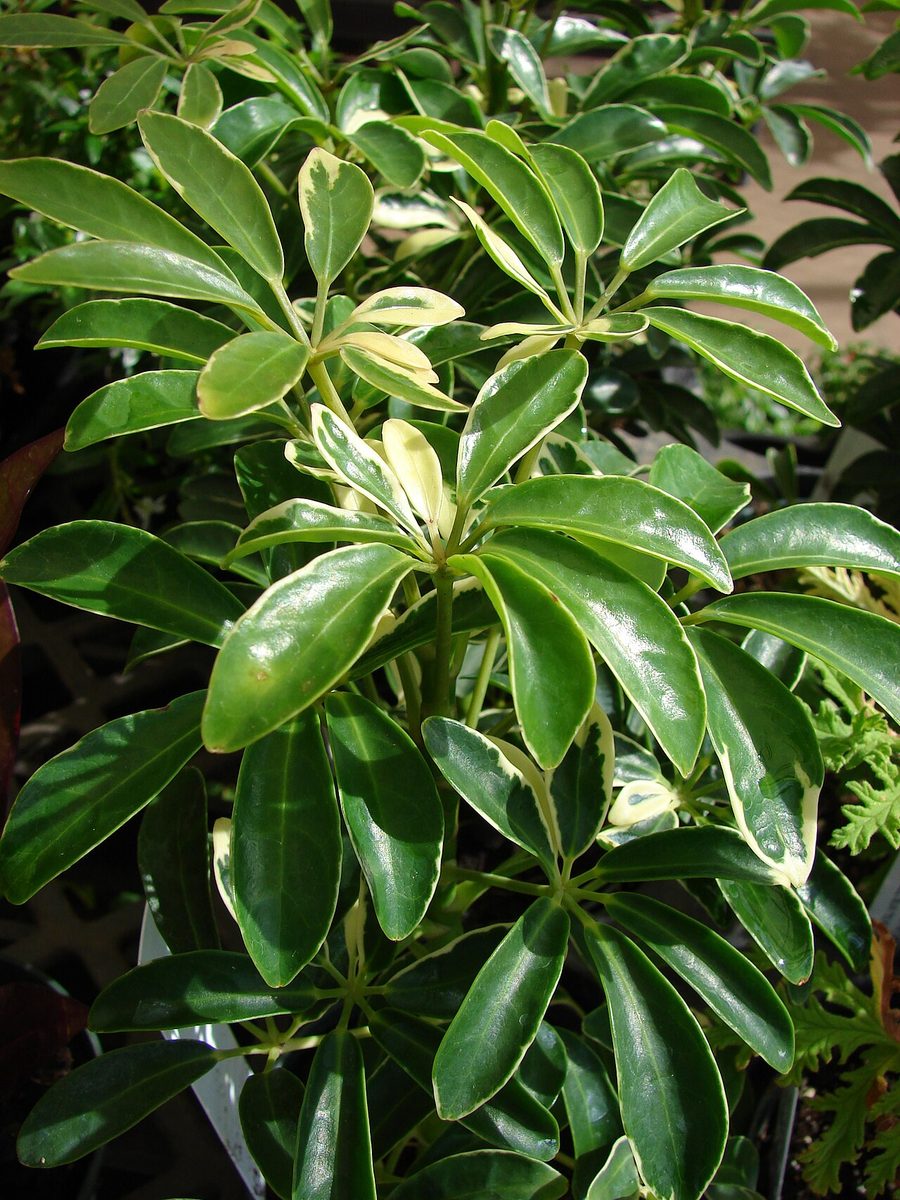
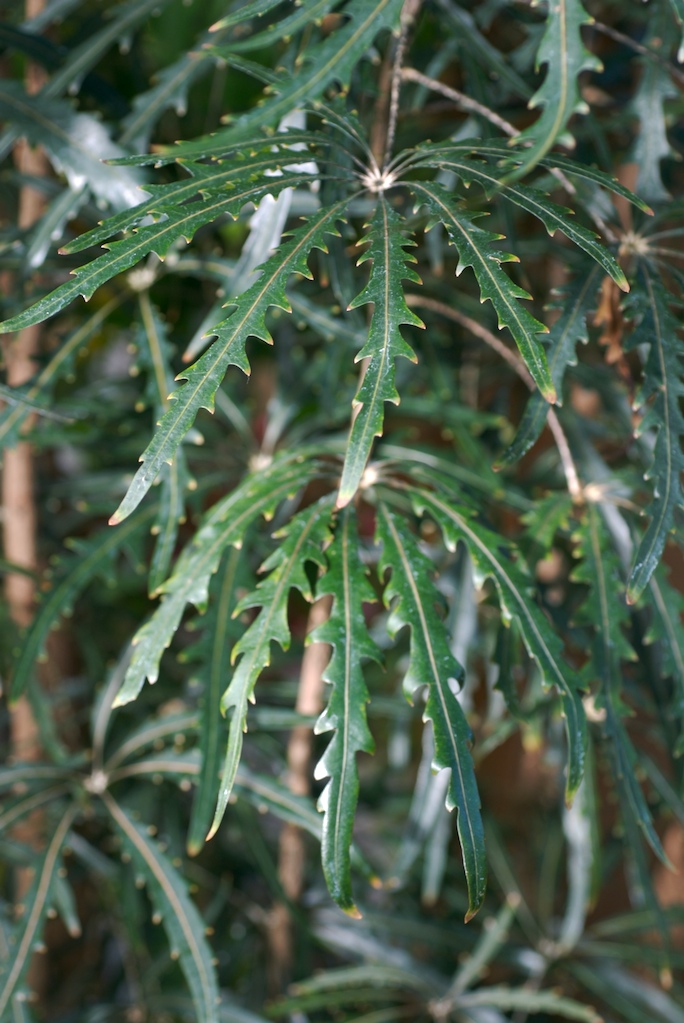
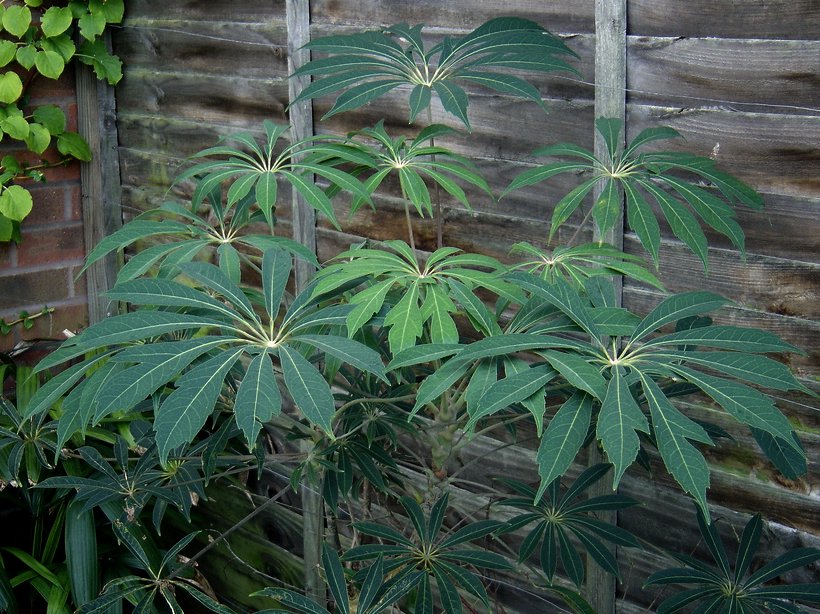
La schefflera, detta anche pianta ombrello, è un genere molto diffuso di piante tropicali apprezzate per il fogliame rigoglioso e attraente. Comprende diverse specie, ognuna con forma delle foglie e portamento particolari. Le schefflere sono amate per l'adattabilità e il valore ornamentale, che le hanno rese un classico sia in casa sia all'aperto.
Specie e varietà (5)
Guida alla cura
Luce
L'ideale è la luce intensa indiretta; il sole diretto del mattino è tollerato e rende la crescita più fitta. Schefflera arboricola (la schefflera nana) tollera la mezz'ombra meglio di S. actinophylla. Con luce insufficiente la pianta si allunga, con foglie distanziate e cadenti.
Acqua
Lasciare asciugare i primi 3-5 cm di terriccio tra un'annaffiatura e l'altra, poi annaffiare abbondantemente. La schefflera sopporta una moderata siccità, ma soffre se il terriccio resta sempre bagnato. Le foglie gialle indicano di solito troppa acqua; la caduta delle foglie può dipendere sia da troppa acqua sia dalla siccità. In inverno ridurre molto la frequenza.
Substrato
Terriccio ben drenante con aggiunta di perlite (3:1). Un buon drenaggio è importante: con il terriccio bagnato la schefflera è soggetta a marciume radicale.
Temperatura e umidità
Ideale 15-24 °C; tollera temperature un po' più fresche della maggior parte delle piante tropicali da appartamento. Minimo 10 °C. L'umidità normale di casa è sufficiente.
Concimazione
Concimare una volta al mese in primavera ed estate con un concime liquido bilanciato a dose piena. In autunno passare a ogni 6-8 settimane e sospendere in inverno.
Potatura
Potarla con decisione in primavera per mantenerne dimensioni e forma: la schefflera reagisce molto bene alle potature drastiche e dai fusti tagliati produce una nuova vegetazione fitta. Senza potature diventa una grande pianta simile a un albero. Pulire periodicamente le foglie. Controllare la pagina inferiore delle foglie per scovare cocciniglie e ragnetto rosso, parassiti comuni. Tutte le parti sono tossiche per gatti, cani e persone.
Propagazione
Talea
Il metodo più comune per moltiplicare la schefflera è la talea di fusto: si preleva una talea dalla pianta e la si fa radicare in acqua o nel terriccio.
Propaggine
Questo metodo consiste nel far radicare un tratto di fusto mentre è ancora attaccato alla pianta madre.