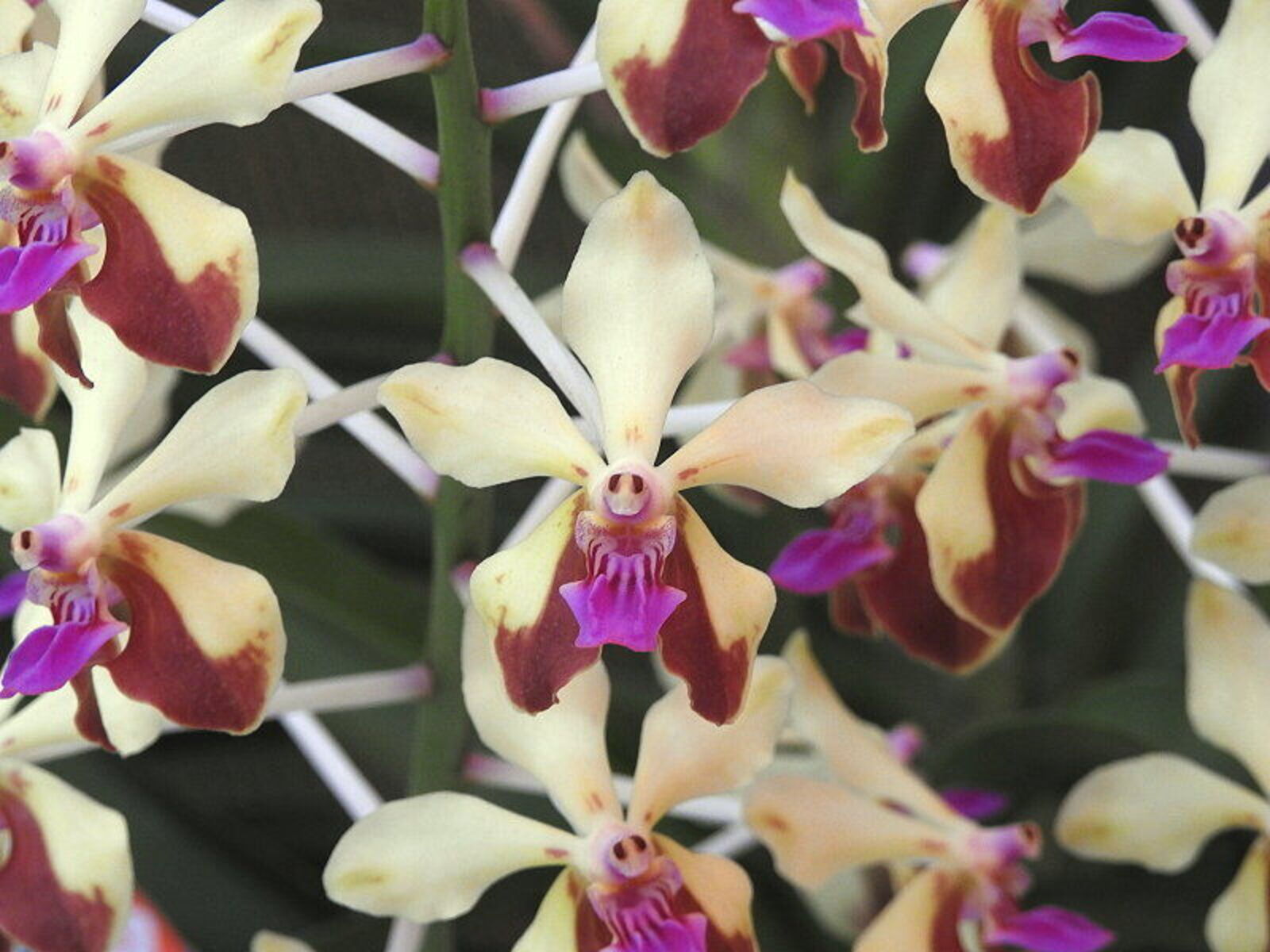
Vanda lamellata var. boxallii
Una varietà botanica di Vanda lamellata con fiori più marcatamente contrastati, marrone-crema. Trattata qui come una selezione infraspecifica di V. lamellata piuttosto che una specie distinta. La coltivazione è identica alla specie: al caldo e luminosa.
Guida alla cura
Luce
Per fiorire bene vuole luce molto intensa e filtrata, tra le esigenze più alte delle orchidee coltivate: quasi pieno sole, con un po' d'ombra a mezzogiorno. Le foglie devono essere di un verde erba chiaro. Con troppa poca luce non fiorisce.
Acqua
Con il caldo annaffiare abbondantemente ogni giorno (di solito si coltiva a radice nuda in cestini a listelli), bagnando a fondo le spesse radici aeree e lasciandole poi asciugare e diventare argentee prima dell'annaffiatura successiva. Con il tempo fresco e nuvoloso ridurre la frequenza.
Substrato
Meglio a radice nuda in cestini aperti, o in un substrato molto grossolano a drenaggio rapido, con la massima circolazione d'aria attorno alle radici.
Temperatura e umidità
Da serra calda, 20-35 °C; tenerla sopra i 15 °C. Ha bisogno di umidità ALTA (60-80%) unita a una forte circolazione d'aria per bilanciare le annaffiature abbondanti.
Concimazione
Durante la crescita attiva concimare a dose ridotta ma spesso (quasi a ogni annaffiatura) con un concime bilanciato per orchidee; ogni tanto sciacquare le radici con abbondante acqua semplice per evitare l'accumulo di sali.
Potatura
Eliminare solo le radici morte e gli steli sfioriti; queste orchidee monopodiali non amano essere disturbate, quindi evitare i rinvasi se non indispensabili. Non tossica.