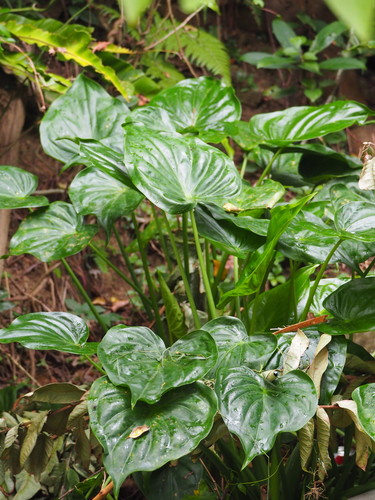
Alocasia cucullata
Alocasia cucullata è un aroide tropicale della famiglia Araceae, coltivato per le sue foglie grandi, scenografiche, spesso metalliche o con venature evidenti; la linfa è tossica.
Guida alla cura
Luce
Le alocasie prediligono luce brillante e indiretta. Il sole diretto può bruciare le foglie, mentre una luce insufficiente provoca crescita stentata e fogliame opaco.
Acqua
Mantenere il substrato costantemente umido ma non inzuppato. Annaffiare quando il primo centimetro di terra risulta asciutto. Le alocasie sono sensibili all'eccesso d'acqua e possono sviluppare marciume radicale se lasciate in terreno fradicio.
Substrato
Usare una miscela ben drenante ricca di sostanza organica. Un mix di torba, perlite e corteccia di pino garantisce il drenaggio e i nutrienti necessari.
Temperatura e umidità
Le alocasie prosperano in ambienti caldi e umidi. Le temperature ideali vanno da 18 °C a 27 °C. Mantenere un'umidità elevata, preferibilmente sopra il 60%, nebulizzando regolarmente le foglie o usando un umidificatore.
Concimazione
Nutrire con un fertilizzante bilanciato idrosolubile ogni 2–4 settimane durante la stagione di crescita (primavera e estate). Ridurre le concimazioni in autunno e inverno quando la crescita rallenta.
Potatura
Eliminare le foglie gialle o danneggiate per mantenere l'aspetto e la salute della pianta. Rinvasare ogni 1–2 anni per rinnovare il substrato e favorire la crescita.
Propagazione
Divisione
Il metodo più comune per moltiplicare l'Alocasia è la divisione, che consiste nel separare rizomi o tuberi al momento del rinvaso. Assicurarsi prima che la pianta madre sia sana.
Polloni / figli
Alcune specie di Alocasia producono polloni, che si possono separare dalla pianta madre e invasare singolarmente.