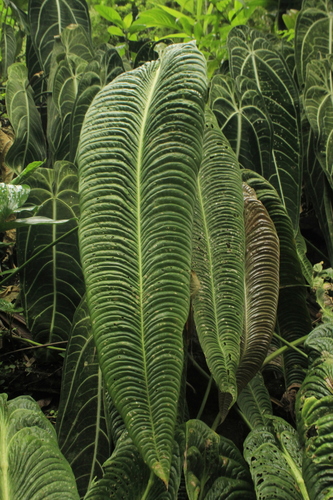
Anthurium veitchii
Anthurium veitchii è un aroide tropicale della famiglia Araceae, coltivato per le sue spate colorate o per il fogliame con venature marcate; la linfa è irritante.
Guida alla cura
Luce
La luce indiretta brillante è indispensabile affinché l'anthurium produca le sue caratteristiche spate cerose (il 'fiore' colorato — in realtà una foglia modificata). Un'esposizione a est o un posto luminoso dietro una tenda trasparente sono ideali. Il sole diretto brucia le brattee cerose e le foglie. Con poca luce l'anthurium sopravvive ma produce pochi fiori o nessuno.
Acqua
Lasciare asciugare i 2–3 cm superficiali del substrato tra un'annaffiatura e l'altra, quindi annaffiare abbondantemente. L'anthurium preferisce un'umidità moderata e costante ma è molto suscettibile al marciume radicale da eccesso d'acqua. Le foglie gialle indicano generalmente un'annaffiatura eccessiva; l'appassimento con terreno asciutto indica carenza idrica. Usare acqua a temperatura ambiente e garantire un drenaggio eccellente.
Substrato
Miscela grossolana e ben drenante: 40% corteccia d'orchidea, 30% perlite, 30% terriccio universale. L'anthurium è semi-epifita — le radici necessitano di ottima aerazione. Evitare substrati compatti e ritentivi d'acqua.
Temperatura e umidità
Temperatura ottimale 18–27 °C; minimo 15 °C. Un'umidità elevata (60–80%) prolunga notevolmente la fioritura e favorisce spate più grandi e vivaci. Usare un umidificatore o un vassoio con ghiaia e acqua. Evitare le correnti d'aria fredda, che causano l'imbrunimento delle spate.
Concimazione
Concimare ogni 2–4 settimane in primavera e in estate con un fertilizzante più ricco di fosforo (la P dell'NPK) per favorire la fioritura. Un fertilizzante bilanciato a mezza dose funziona bene. Sospendere in inverno.
Potatura
Eliminare le spate sfiorite alla base una volta che diventano verdi e poi brune. Questo stimola la produzione di nuovi fiori. Pulire le foglie cerose con un panno umido per rimuovere la polvere. Rinvasare ogni 2 anni in primavera. L'anthurium contiene ossalato di calcio: tossico per animali domestici e persone se ingerito.
Propagazione
Divisione
Il metodo più comune per moltiplicare l'anturio è la divisione, che consiste nel separare la zolla al momento del rinvaso. Assicurarsi prima che la pianta madre sia sana.
Talea
Alcune specie di anturio si possono moltiplicare per talea di fusto.