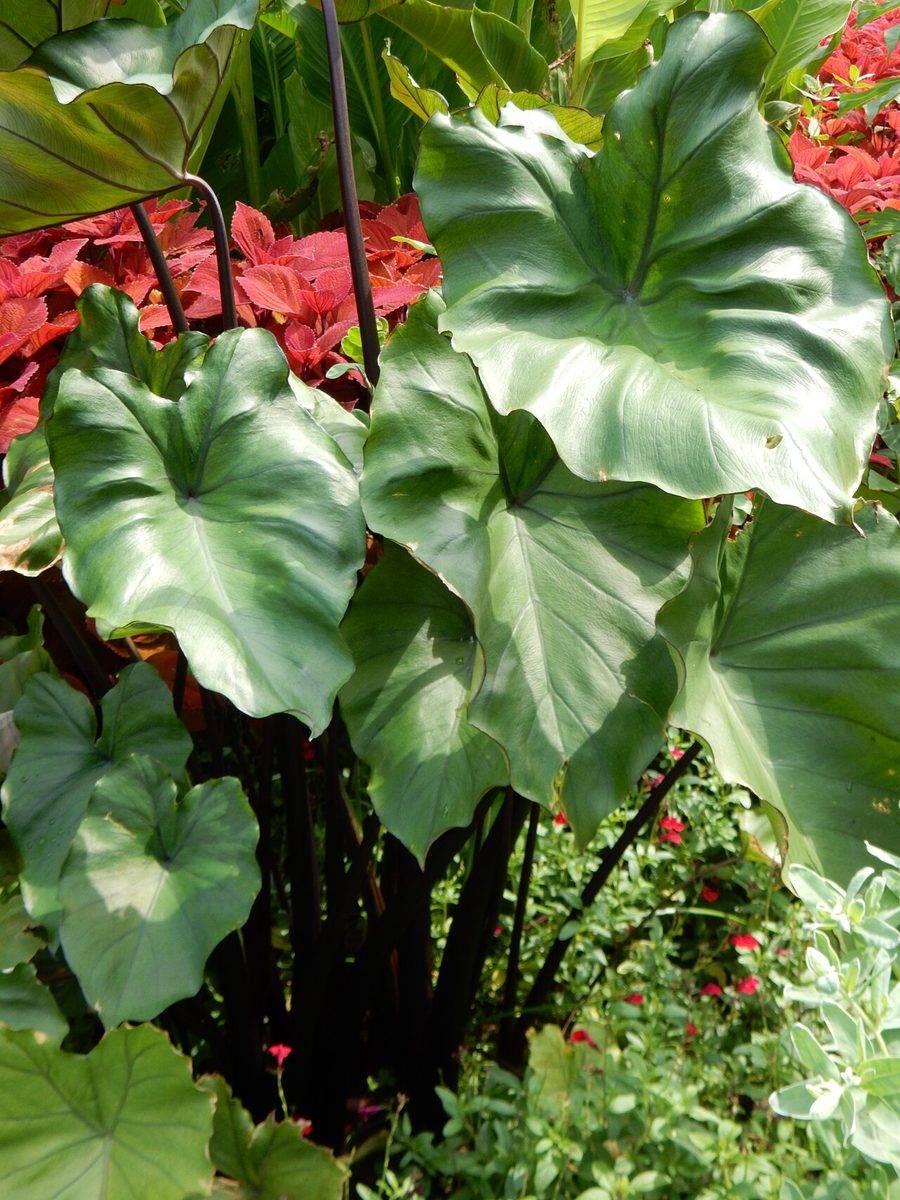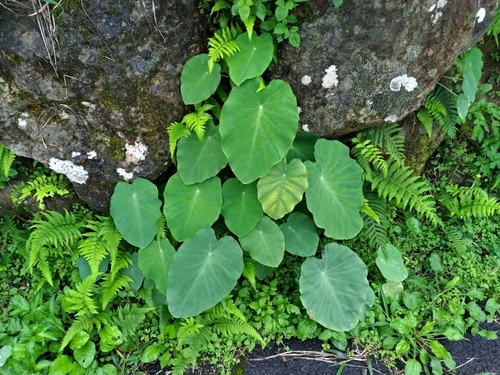
Colocasia esculenta
Colocasia esculenta è un grande aroide tropicale della famiglia Araceae (taro, orecchio d'elefante), coltivato per le grandi foglie e i cormi commestibili; le parti crude sono tossiche.
Guida alla cura
Luce
Colocasia (taro, orecchio d'elefante) preferisce luce brillante e indiretta o ombra parziale. Nel suo habitat naturale di zone umide riceve luce filtrata attraverso la volta forestale. Il sole diretto e intenso brucia le grandi foglie. All'aperto, in climi miti, tollera più sole se il terreno è sufficientemente umido.
Acqua
Colocasia è una delle piante da appartamento con maggior fabbisogno idrico — cresce naturalmente in paludi, rive di torrenti e persino in acqua poco profonda. Mantenere il substrato costantemente umido o bagnato. Alcune varietà possono crescere con le radici sommerse in acqua (coltivazione acquatica). Non lasciare mai asciugare — l'appassimento causa danni irreversibili alle grandi foglie. In inverno (riposo), ridurre significativamente le annaffiature.
Substrato
Miscela ricca, fertile e ritentiva di umidità: 60% buon terriccio universale, 20% cocco fibra, 20% perlite. Può essere coltivata anche in substrato per piante acquatiche o da riva per una coltivazione semi-acquatica.
Temperatura e umidità
Temperatura ottimale 18–27 °C. Molto sensibile al freddo — proteggere dal gelo. Nei climi temperati il cormo va in riposo in autunno (il fogliame secca) e può essere conservato asciutto e al riparo dal gelo fino alla primavera, oppure trattato come annuale. Un'umidità elevata favorisce lo sviluppo delle foglie più grandi.
Concimazione
Concimare ogni 1–2 settimane durante la stagione di crescita con un fertilizzante liquido bilanciato ad alto contenuto di azoto. Colocasia è una grande consumatrice e cresce vigorosamente. Ridurre in autunno al rallentamento della crescita.
Potatura
Eliminare le foglie vecchie o danneggiate alla base. Colocasia cresce da un cormo (fusto sotterraneo ingrossato) e produce polloni liberamente — questi possono essere separati in primavera per la propagazione. I cormi sono commestibili cotti (il taro crudo contiene ossalato di calcio ed è tossico), ma tutte le parti aeree sono irritanti se ingerite crude.
Propagazione
Divisione
È il metodo principale e usa i polloni dei cormi maturi. Meglio in primavera.
Cultivar e varietà (5)