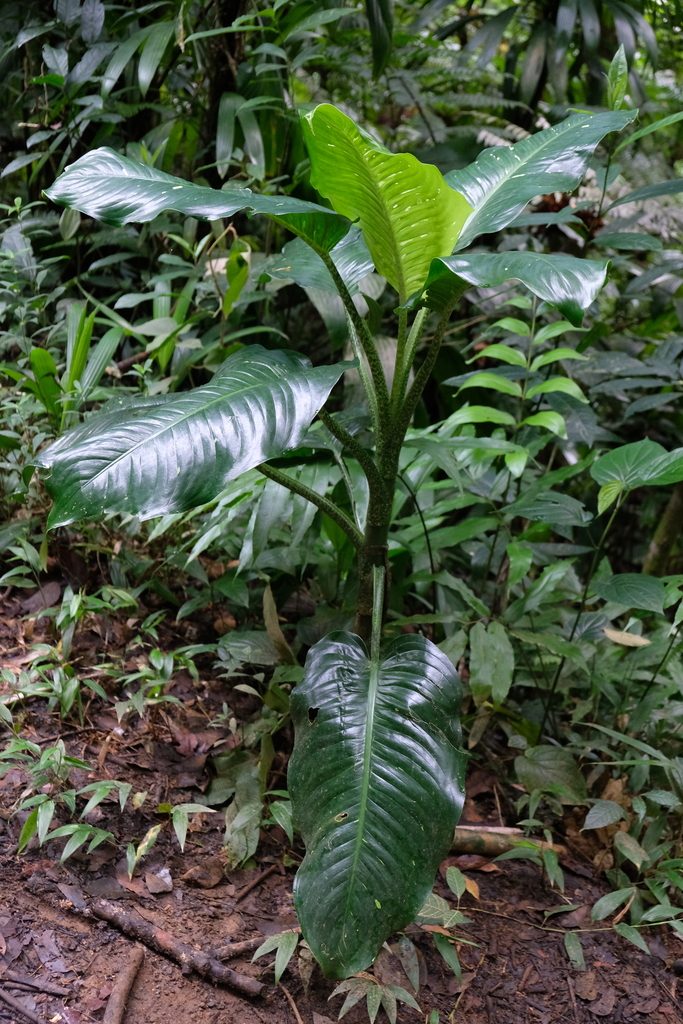
Dieffenbachia amoena è una perenne tropicale sempreverde della famiglia delle aracee (Araceae), coltivata come pianta da fogliame da appartamento; la sua linfa contiene ossalato di calcio irritante.
Guida alla cura
Luce
Tollera bene la luce indiretta da scarsa a media, il che la rende una delle piante da fogliame più indulgenti negli interni poco luminosi. Con luce intensa indiretta cresce più in fretta e le variegature sono più vivaci. Evitare il sole diretto, che brucia le grandi foglie.
Acqua
Lasciare asciugare i primi 3-4 cm di terriccio tra un'annaffiatura e l'altra, poi annaffiare abbondantemente. In inverno ridurre la frequenza. La Dieffenbachia sopporta una siccità occasionale meglio del terriccio fradicio: l'eccesso d'acqua fa ingiallire le foglie basse e causa marciume radicale.
Substrato
Usare un terriccio a base di torba ben drenante, con aggiunta di perlite (circa 3:1). Il buon drenaggio è importante: i fusti spessi accumulano acqua e tendono a marcire se la zona delle radici resta bagnata.
Temperatura e umidità
Intervallo ideale 18-27 °C; minimo 12 °C. Evitare le correnti fredde: un freddo improvviso fa afflosciare la pianta e scolorire le foglie. Basta un'umidità media, ma un'umidità più alta favorisce una crescita più grande e rigogliosa.
Concimazione
Concimare una volta al mese in primavera ed estate con un concime liquido bilanciato a metà dose. Non concimare in autunno e inverno. Evitare i concimi ricchi di azoto, che fanno filare la pianta.
Potatura
⚠️ ATTENZIONE: la linfa della Dieffenbachia contiene cristalli di ossalato di calcio: usare SEMPRE i guanti per potarla o rinvasarla. Il contatto con occhi o bocca provoca un bruciore intenso e un gonfiore temporaneo di lingua e gola (da cui il nome inglese “dumb cane”, canna muta). Tenerla lontana da bambini e animali. Se la pianta si allunga troppo, in primavera accorciare il fusto per stimolarne la ramificazione. Il pezzo tagliato si può usare per moltiplicarla.
Propagazione
Divisione
Il metodo più comune per moltiplicare la Dieffenbachia è la divisione, che consiste nel separare i fusti al momento del rinvaso. Assicurarsi prima che la pianta madre sia sana.
Talea
Alcune specie di Dieffenbachia si possono moltiplicare per talea di fusto.