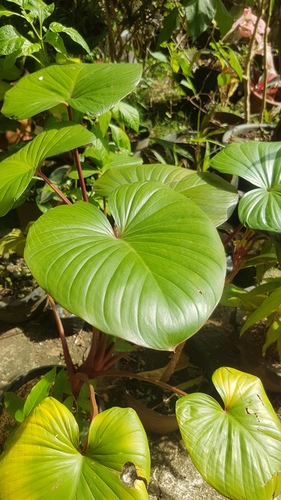
Homalomena rubescens
Homalomena rubescens è un aroide tropicale cespitoso della famiglia Araceae, coltivato per il fogliame lucido e spesso colorato.
Guida alla cura
Luce
Tra gli aroidi disponibili è uno dei più tolleranti all'ombra — Homalomena prospera in luce indiretta da bassa a media e sopporta posizioni lontane dalle finestre. Evitare il sole diretto, che brucia le foglie vellutate. La luce indiretta intensa accelera la crescita ma non è indispensabile.
Acqua
Lasciare asciugare i 2–3 cm superficiali del substrato tra un'annaffiatura e l'altra, quindi annaffiare abbondantemente. Homalomena è più tollerante alla siccità rispetto a Calathea e Philodendron dall'aspetto simile. Ridurre la frequenza in inverno. L'eccesso d'acqua causa marciume radicale; la carenza idrica provoca appassimento ma la pianta si riprende rapidamente.
Substrato
Usare una miscela ben drenante con aggiunta di perlite (3:1). Una buona aerazione attorno alle radici è importante. Il pH leggermente acido (5.5–6.5) è ideale.
Temperatura e umidità
Temperatura ottimale 18–27 °C; minimo 15 °C. Molto sensibile al freddo — tenere lontana da correnti d'aria e finestre fredde. L'umidità standard degli interni è accettabile, ma il 50–60% favorisce un fogliame più rigoglioso.
Concimazione
Concimare mensilmente in primavera e in estate con un fertilizzante liquido bilanciato a mezza dose. Sospendere in autunno e in inverno. Homalomena è un consumatore relativamente parsimonioso.
Potatura
Eliminare le foglie vecchie o danneggiate alla base. Pulire le foglie polverose con un panno umido. Rinvasare ogni 2 anni in primavera quando le radici fuoriescono dai fori di drenaggio. Nota: contiene ossalato di calcio — tossica se ingerita.
Propagazione
Divisione
Il metodo più comune per moltiplicare la Homalomena è la divisione, che consiste nel separare rizomi o tuberi al momento del rinvaso. Assicurarsi prima che la pianta madre sia sana.
Polloni / figli
Alcune specie di Homalomena producono polloni, che si possono separare dalla pianta madre e invasare singolarmente.