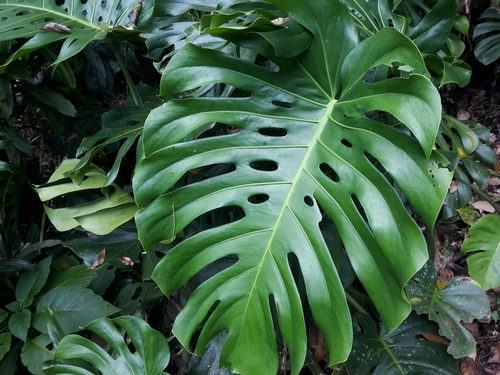
Monstera deliciosa
Dettagli Sicurezza
Contiene cristalli di ossalato di calcio. Può causare gonfiore della bocca e del tratto digerente.
Monstera deliciosa è un aroide rampicante della famiglia Araceae, coltivato per le sue grandi foglie spesso fenestrate.
Guida alla cura
Luce
La luce intensa e indiretta favorisce le foglie più grandi con le fenestrature più profonde (buchi e spaccature). Monstera tollera la luce media ma le foglie rimangono più piccole e meno fenestrate. Il sole diretto e intenso brucia le foglie; tuttavia, un po' di sole mattutino diretto è benefico. La luce insufficiente è la causa principale per cui le Monstera adulte non sviluppano le caratteristiche fenestrature.
Acqua
Lasciare asciugare i primi 3–5 cm di substrato tra un'annaffiatura e l'altra, poi annaffiare abbondantemente finché l'acqua non scola liberamente. Monstera trattiene parte dell'acqua nelle sue grandi foglie, ma è suscettibile al marciume radicale se tenuta troppo bagnata. Annaffiare meno in inverno. Foglie gialle senza altri sintomi indicano generalmente eccesso di irrigazione.
Substrato
Utilizzare un substrato ricco, grossolano e drenante: 40% terriccio universale, 30% perlite, 30% corteccia di orchidea. Una buona aerazione intorno alle radici è importante per questa specie epifiltica.
Temperatura e umidità
Ottimale 18–27 °C; minimo 12 °C. Un'umidità da moderata ad alta (50–70%) favorisce foglie più grandi e sane. L'umidità interna standard è sufficiente per la sopravvivenza, ma un umidificatore migliora significativamente la crescita.
Concimazione
Concimare mensilmente in primavera e in estate con un fertilizzante liquido bilanciato. Ridurre a ogni 6–8 settimane in autunno, sospendere in inverno. Un fertilizzante arricchito con calcio e magnesio supporta lo sviluppo delle foglie grandi.
Potatura
Fornire un palo di muschio o un tutore robusto — Monstera è un arrampicatore naturale che produce foglie più grandi e più fenestrate quando può arrampicarsi verso l'alto. Le radici aeree che si sviluppano lungo il fusto possono essere indirizzate nel palo di muschio (mantenerlo umido) oppure lasciate ricadere liberamente. Non rimuovere le radici aeree. Pulire le foglie grandi con un panno umido mensilmente. Monstera contiene ossalato di calcio — tossica per gli animali domestici e irritante per la pelle umana.
Propagazione
Talea
Il metodo più comune per moltiplicare la Monstera è la talea di fusto: si taglia un tratto di fusto con almeno un nodo e lo si mette a radicare in acqua o nel terriccio.
Propaggine
La margotta è un altro metodo efficace per moltiplicare la Monstera.
Cultivar e varietà (4)