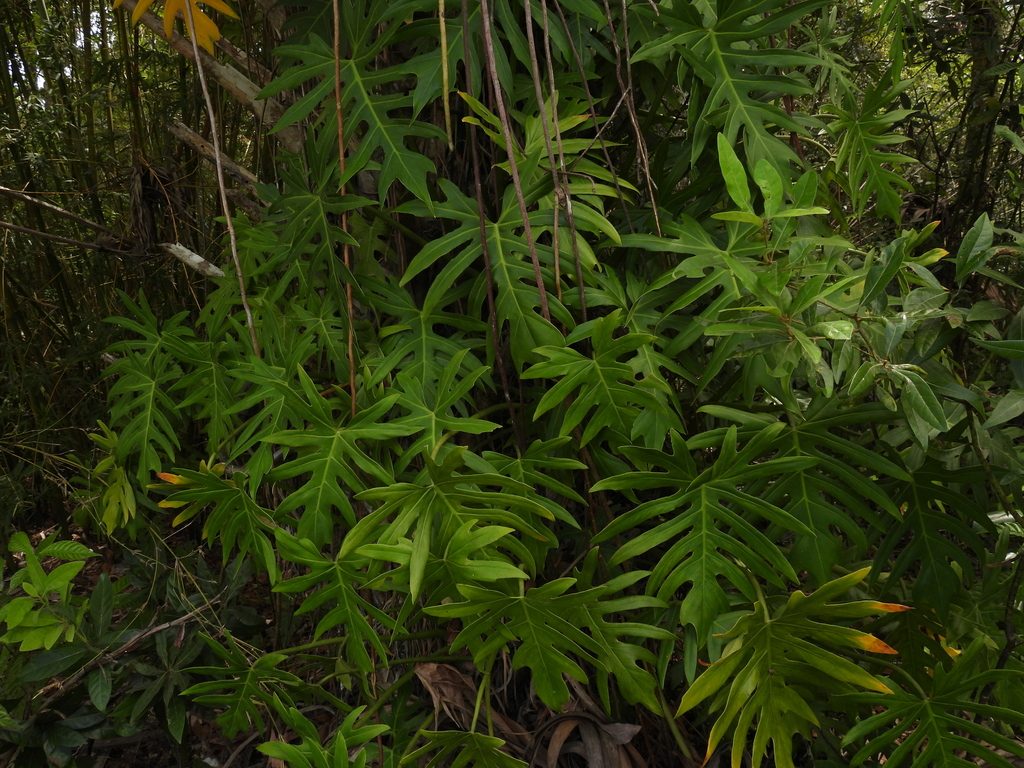
Philodendron xanadu è un'aracea tropicale della famiglia Araceae, coltivata come pianta da fogliame da appartamento, rampicante o a rosetta; la linfa è leggermente tossica.
Guida alla cura
Luce
La luce intensa indiretta dà la crescita migliore sia alle forme rampicanti (per esempio Philodendron hederaceum) sia a quelle non rampicanti, a rosetta (per esempio Philodendron gloriosum e P. bipinnatifidum). Tollera la luce media, ma le foglie diventano più piccole e più distanziate. Le cultivar variegate (per esempio 'Brasil' e 'Lemon Lime') hanno bisogno di più luce per mantenere il colore. Evitare il sole diretto.
Acqua
Lasciare asciugare i primi 2-4 cm di terriccio tra un'annaffiatura e l'altra, poi annaffiare abbondantemente. Il filodendro preferisce un'umidità moderata e costante, più che veri cicli di siccità. Le foglie gialle sui fusti bassi sono il segno più comune di troppa acqua; la pianta afflosciata con il terriccio asciutto indica sete. Ridurre la frequenza in inverno.
Substrato
Substrato ben drenante e aerato: 40% terriccio, 30% perlite, 30% bark per orchidee. È importante una buona aerazione delle radici: in natura il filodendro è epifita e sta meglio in un substrato grossolano.
Temperatura e umidità
Ideale 18-27 °C; minimo 13 °C. Un'umidità da moderata ad alta (50-70%) favorisce foglie più grandi e internodi più lunghi. L'umidità normale di casa basta per la sopravvivenza, ma un umidificatore migliora molto la qualità della crescita.
Concimazione
Concimare ogni 2-4 settimane in primavera ed estate con un concime liquido bilanciato. In autunno passare a una volta al mese e sospendere in inverno. Un concime con aggiunta di calcio favorisce lo sviluppo di foglie grandi.
Potatura
I filodendri rampicanti (a foglia di cuore, 'Brasil' e simili) producono foglie più grandi e adulte se hanno un tutore in muschio o un supporto ruvido su cui arrampicarsi: indirizzare le radici aeree nel tutore umido. Le forme a rosetta non hanno bisogno di sostegni, ma beneficiano della rimozione regolare delle foglie esterne secche. Tutti i filodendri contengono ossalato di calcio e sono tossici per animali e persone se ingeriti.
Propagazione
Talea
Il metodo più comune per moltiplicare il filodendro è la talea di fusto: si taglia un fusto sano e lo si mette a radicare in acqua o nel terriccio.
Divisione
Alcune specie di filodendro si possono moltiplicare anche per divisione, soprattutto quelle che crescono a cespo.