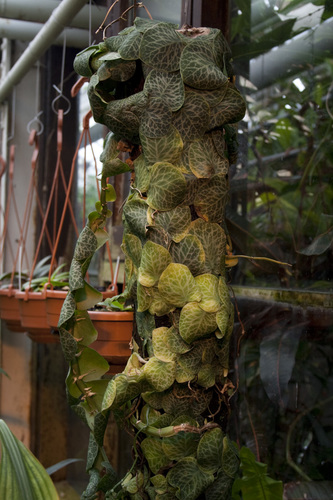
Rhaphidophora cryptantha
Rhaphidophora cryptantha è un aroide tropicale rampicante della famiglia Araceae, coltivato per il suo fogliame lucido e talvolta fenestrato.
Guida alla cura
Luce
La luce indiretta intensa è ideale — Rhaphidophora produce le foglie migliori e più divise vicino a una finestra luminosa. Tollera la luce media, ma la fenestrazione diminuisce e le dimensioni fogliari si riducono. Evitare il sole diretto intenso. Le esigenze sono molto simili a quelle di Monstera, a cui è strettamente imparentata.
Acqua
Lasciare asciugare i primi 3–4 cm di substrato tra le annaffiature, poi bagnare abbondantemente. Rhaphidophora è sensibile al marciume radicale per eccesso di acqua, ma avvizzisce rapidamente anche in caso di siccità. Le grandi foglie fenestrate perdono umidità velocemente — controllare il substrato ogni 3–4 giorni durante il periodo caldo.
Substrato
Miscela grossolana e drenante: 40% terriccio universale, 30% perlite, 30% corteccia di orchidea. L'aerazione radicale è importante per questo epifita rampicante.
Temperatura e umidità
Ottimale 18–27 °C; minimo 13 °C. Un'umidità da moderata ad alta (50–70%) favorisce foglie più grandi e più fenestrate. L'umidità interna standard è sufficiente per la sopravvivenza.
Concimazione
Concimare mensilmente in primavera e in estate con un fertilizzante liquido bilanciato. Ridurre in autunno, sospendere in inverno.
Potatura
Fornire un palo di muschio o un tutore scabro per l'arrampicata — come Monstera, Rhaphidophora produce foglie più grandi e mature, con fenestrature più accentuate, quando può arrampicarsi verso l'alto. Mantenere il palo umido per favorire l'attacco delle radici aeree. Rhaphidophora tetrasperma (Mini Monstera) è la specie più venduta — cresce vigorosamente e potrebbe richiedere potature regolari. Contiene ossalato di calcio — tossica per gli animali domestici.
Propagazione
Talea
Il metodo più comune per moltiplicare la Rhaphidophora è la talea di fusto: si taglia un tratto di fusto con almeno un nodo e lo si mette a radicare in acqua o nel terriccio.
Propaggine
Un altro metodo per moltiplicare la Rhaphidophora è la margotta, che fa formare le radici su un fusto ancora attaccato alla pianta madre.