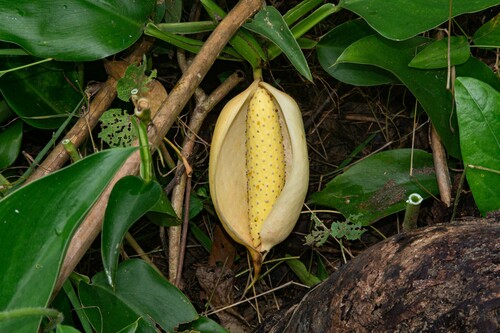
Scindapsus officinalis
Scindapsus officinalis è un aroide ricadente o rampicante della famiglia Araceae, coltivato per le sue foglie satinate con marcature argentate.
Guida alla cura
Luce
La luce indiretta da intensa a media è ideale per mantenere le caratteristiche marcature argentate di Scindapsus pictus. Tollera la luce più bassa ma il disegno metallico svanisce notevolmente. Evitare il sole diretto, che schiarisce le foglie. Le esigenze sono molto simili al Pothos, ma Scindapsus richiede leggermente più luce per mantenere la variegatura argentata.
Acqua
Lasciare asciugare quasi completamente il substrato tra le annaffiature — Scindapsus è tollerante alla siccità e sopporta molto meglio la carenza idrica che l'eccesso. Annaffiare abbondantemente, poi aspettare finché le foglie diventano leggermente più morbide al tatto (segnale di lieve stress idrico) prima di annaffiare nuovamente. Il marciume radicale da eccesso di irrigazione è il problema più comune.
Substrato
Miscela molto drenante con abbondante perlite (50:50 terriccio universale e perlite). L'apparato radicale predilige condizioni di buona aerazione e drenaggio rapido.
Temperatura e umidità
Ottimale 18–27 °C; minimo 13 °C. L'umidità moderata è adeguata — Scindapsus tollera l'aria secca meglio di Calathea o delle felci.
Concimazione
Concimare mensilmente in primavera e in estate con un fertilizzante liquido bilanciato a mezza dose. Nessuna concimazione in autunno o in inverno.
Potatura
Potare per controllare la lunghezza e stimolare la ramificazione — tagliare sopra un nodo e il fusto si ramificherà. Le talee radicano facilmente in acqua o in substrato umido. Fornire un palo di muschio o una rete come supporto per l'arrampicata — Scindapsus produce foglie più grandi quando può attaccare le radici aeree e salire.
Propagazione
Talea
Il metodo più comune per moltiplicare lo Scindapsus è la talea di fusto: è semplice e si può fare in qualsiasi periodo dell'anno.