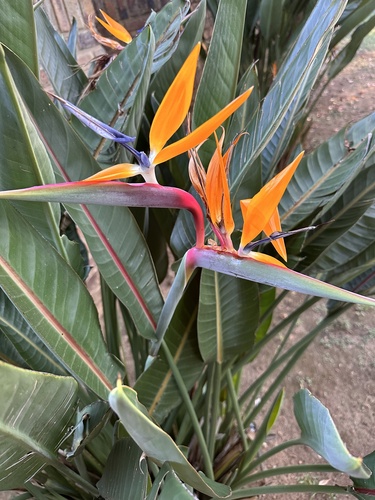
Strelitzia reginae
Strelitzia, comunemente nota come uccello del paradiso, è un genere di cinque specie di piante da fiore della famiglia Strelitziaceae, originarie del Sudafrica. Il genere comprende l'iconica Strelitzia reginae, i cui vistosi fiori arancioni e blu ricordano il piumaggio di un esotico uccello in volo. Strelitzia reginae e S. nicolai sono tra le piante da fiore più spettacolari coltivabili in appartamento con luce sufficiente.
Guida alla cura
Luce
La strelitzia necessita di abbondante luce e idealmente di alcune ore di sole diretto al giorno per produrre i suoi spettacolari fiori arancioni e blu in appartamento. Una finestra esposta a sud è l'ideale — più sole diretto, meglio è. Una luce insufficiente (causa molto comune per cui non fiorisce in casa) produce solo un rigoglioso fogliame ma nessun fiore. Strelitzia reginae necessita di almeno 3–4 anni di maturità E di un'ottima luminosità per fiorire.
Acqua
Annaffiare abbondantemente quando i primi 3–4 cm di terreno sono asciutti. La strelitzia è moderatamente tollerante alla siccità tra un'annaffiatura e l'altra, ma apprezza un'umidità costante durante la stagione di crescita. L'eccesso idrico causa il marciume radicale; non lasciare mai la pianta in acqua stagnante. Ridurre significativamente le annaffiature in inverno.
Substrato
Substrato ricco e ben drenante: 50% terriccio universale di qualità, 30% perlite, 20% sabbia grossolana. Le radici carnose necessitano di buon drenaggio e aerazione.
Temperatura e umidità
Ottimale 18–27 °C all'aperto e in appartamento in estate; tollera brevemente fino a 5 °C. Un'umidità moderata è sufficiente. Spostare all'esterno in estate per massimizzare l'esposizione al sole e aumentare le probabilità di fioritura.
Concimazione
Concimare ogni 2 settimane in primavera e in estate con un fertilizzante liquido bilanciato o ricco di potassio. Questa pianta vigorosa ha un elevato fabbisogno nutritivo. Ridurre in autunno, sospendere in inverno.
Potatura
Rimuovere le foglie vecchie, danneggiate o ingiallite alla base. Non rinvasare frequentemente — la strelitzia fiorisce meglio a radice raccolta. Rinvasare solo quando le radici riempiono completamente il vaso e fuoriescono dai fori di drenaggio. Le grandi foglie a forma di pagaia si spaccano naturalmente lungo le nervature per effetto delle correnti d'aria — questo è normale e non danneggia la pianta.
Propagazione
Divisione
Il metodo più comune per moltiplicare la sterlizia è la divisione, che consiste nel separare i rizomi al momento del rinvaso. Assicurarsi prima che la pianta madre sia sana.
Semina
La sterlizia si può moltiplicare anche da seme, anche se è un metodo più lento e meno comune.