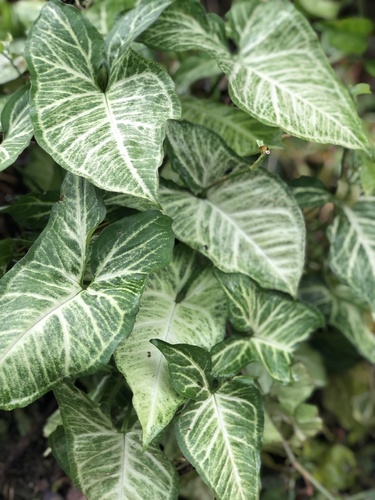
Syngonium podophyllum
Syngonium podophyllum è un aroide rampicante o ricadente della famiglia Araceae, coltivato per le sue foglie a forma di freccia, spesso variegate; la linfa è leggermente tossica.
Guida alla cura
Luce
La luce indiretta da intensa a moderata si adatta bene a Syngonium. Tollera la luce più bassa, ma le forme variegate (rosa, bianche) perdono la colorazione e tornano verdi all'ombra. Evitare il sole diretto, che brucia le foglie a forma di punta di freccia. L'intensità della variegatura è direttamente correlata al livello di luce.
Acqua
Lasciare asciugare i primi 2–3 cm tra le annaffiature, poi bagnare abbondantemente. Syngonium predilige un'umidità costante — avvizzisce notevolmente quando è troppo asciutto ma si riprende rapidamente. Ridurre le innaffiature in inverno. L'eccesso d'acqua causa foglie gialle e marciume radicale; la carenza causa avvizzimento e punte fogliari marroni.
Substrato
Terriccio drenante con aggiunta di perlite (3:1). Un buon drenaggio previene il marciume radicale in questa pianta vigorosa.
Temperatura e umidità
Ottimale 18–27 °C; minimo 13 °C. Un'umidità da moderata ad alta (50–60%) favorisce una crescita rigogliosa e previene i bordi fogliari marroni. L'umidità interna standard è adeguata.
Concimazione
Concimare ogni 2 settimane in primavera e in estate con un fertilizzante liquido bilanciato a mezza dose. Ridurre a mensile in autunno, sospendere in inverno.
Potatura
Potare regolarmente per mantenere un portamento compatto e cespuglioso — Syngonium tende a diventare volubile con la maturità. Le piante giovani producono foglie a freccia compatte e lobate; quelle più vecchie sviluppano foglie più complesse e divise con un portamento rampicante. Fornire un palo di muschio per le forme arrampicanti. Contiene ossalato di calcio — tossica per gli animali domestici e irritante per la pelle umana.
Propagazione
Divisione
Il metodo più comune per moltiplicare il singonio è la divisione, che consiste nel separare i cespi di radici al momento del rinvaso. Assicurarsi prima che la pianta madre sia sana.
Talea
Il singonio si può moltiplicare anche per talea di fusto.